
“Most people don't realize that the mind constantly chatters. And yet, that chatter winds up being the force that drives us much of the day in terms of what we do, what we react to, and how we feel.” – Jon Kabat-Zinn
As Jon Kabat-Zinn notes, much of our lives are spent absorbed in our internal dialogue.
We worry about the future, replay the past, and carry around thoughts we haven't fully worked through. Over time, these mental habits can contribute towards unprocessed emotions and poor mental wellbeing.
Journaling offers a surprisingly simple way to interrupt this cycle.
Decades of research suggests that writing about your thoughts, feelings, and experiences can improve your mental and physical health and help you better understand yourself.
In this online guide, we’ll explore:
- What is journaling for mental health?
- Benefits of journaling for mental health
- Why journaling works
- How to journal for mental health (+ a free template)
- Journaling prompts and tips
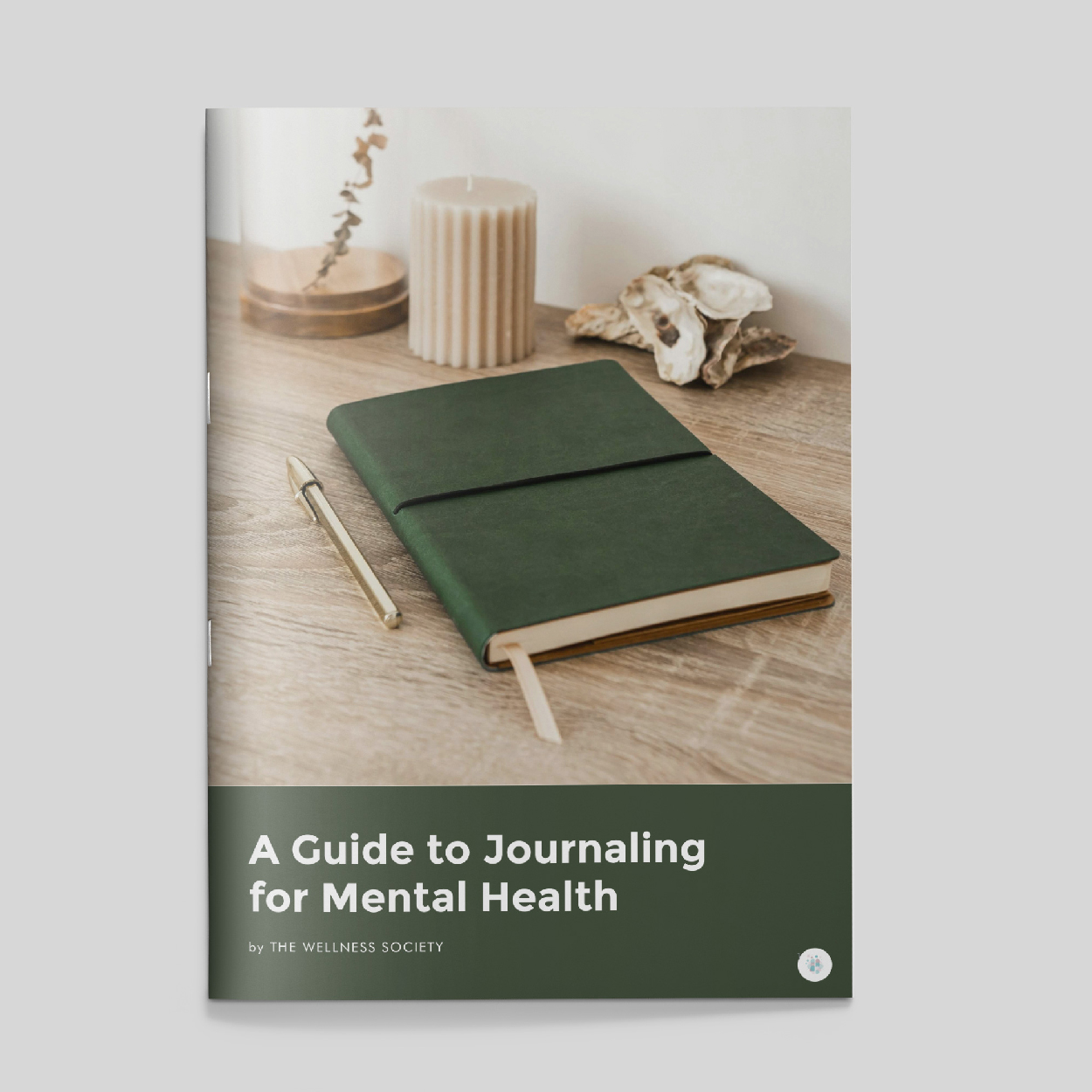
A free PDF of this guide is available to download below:
What Is Journaling for Mental Health?
“As a therapist, I suggest journaling to nearly all my clients. This isn't because it's currently fashionable, but simply because it's one of the most scientifically proven approaches to emotional management.” - Michele LaFemina, licensed therapist
To understand why journaling helps, it's useful to first look at three things that tend to make our mental health worse.
1. Rumination
Research suggests that a root cause of both depression and anxiety symptoms is rumination – the tendency to focus your attention on distressing thoughts, emotions, and memories.
2. Unhelpful Thinking Patterns
Research consistently shows that unhelpful thinking patterns are associated with poorer mental wellbeing. This idea sits at the core of Cognitive Behavioural Therapy (CBT).
CBT is built on the principle that:
- Thoughts influence emotions
- Emotions influence behaviour
- Behaviour can reinforce thoughts again
In CBT, unhelpful thinking patterns are called cognitive distortions. They include catastrophising, black-and-white thinking, and mind reading (here’s a free CBT worksheet). Left unchecked, they can negatively influence how you feel about yourself, others, and the world around you.
3. Emotional Suppression
When emotions get pushed down rather than processed, they tend to resurface in other ways.
Irritability, panic attacks, and burnout are common signs of chronic emotional suppression.
Journaling creates a structured outlet for all three factors associated with poor mental wellbeing:
- It can help reduce rumination
- It brings thinking patterns into the open where they can be examined
- It provides an outlet for suppressed emotions
Benefits of Journaling for Mental Health
- Reduced stress and anxiety
- Improved emotional regulation
- Greater self-awareness
- Increased resilience during difficult times
- Clarity around values and goals
- Finding purpose and meaning
- Exploring different perspectives
- Improved physical wellbeing
Let's explore why journaling works in more detail, before diving into practical journaling techniques.
Why Journaling Works
Getting Outside Your Own Head
“What we need to learn to do is look at thought, rather than from thought.” – Stephen C. Hayes
One of journaling's most powerful effects comes from creating distance between you and your thoughts.
When distressing thoughts remain inside your head, they can feel overwhelming. Writing them down transforms them into something separate from yourself.
As licensed clinician Natasha Davalt explains:
“One of the most important psychological aspects of the process is creating cognitive distance between oneself and one's thoughts, feelings, and worries. Being stuck inside our heads, we sometimes cannot clearly see and organize our thoughts. This act allows us to detach from what we are feeling emotionally and observe and reflect on it instead, which may decrease the emotional load and intensity.”
Instead of endlessly replaying thoughts, journaling encourages you to examine them from a new perspective. This interrupts rumination and helps you gain new insights.
As certified mindfulness meditation teacher Marijke Ocean Joy Kemble notes, “Writing something down signals that it has been captured, interrupting that cycle and opening the door for genuine mental rest.”
“When a thought moves from inside us to in front of us,” Kemble says, “we gain just enough distance to observe it more clearly – less like someone caught in the story, and more like a thoughtful, caring witness to it.”
Reframing How You Think
Journaling brings unhelpful thinking patterns into view.
Once a thought is displayed to you in writing, it's much easier to examine – you can see more clearly whether it's accurate, proportionate, or worth the mental energy you've been giving it.
This is what psychologists call cognitive reframing. While this can be difficult to do in the peak of stress or anxiety, guided journaling prompts and exercises provide a structured framework for later reflection.
Integrating Unprocessed Emotions
As mentioned, another important mechanism involves emotional processing. The theory is that suppressing thoughts and feelings about difficult experiences can place a strain on both our mental and physical wellbeing.
Writing provides an opportunity to organise those experiences into a coherent narrative, helping us make sense of what happened and potentially reducing the stress associated with emotional inhibition.
This theory was first proposed by psychologist James Pennebaker, whose pioneering research on expressive writing began in 1986. He found that people who wrote about emotionally difficult experiences showed measurable improvements in both mental and physical wellbeing. His work helped establish expressive writing as a legitimate therapeutic tool.
The connection between emotional expression and physical health has been explored more recently by physician and author Gabor Maté.
His work highlights how suppressed emotions can affect physical wellbeing through the stress-response system:
“Emotional experiences are translated into potentially damaging biological events when human beings are prevented from learning how to express their feelings effectively.”
In his international bestselling book When the Body Says No: The Hidden Costs of Stress, Maté highlights the powerful role that childhood experiences play in shaping our emotional expression habits:
“Not one of the many adults interviewed for this book could answer in the affirmative when asked the following: When, as a child, you felt sad, upset or angry, was there anyone you could talk to – even when he or she was the one who had triggered your negative emotions? In a quarter century of clinical practice […] I have never heard anyone with cancer or with any chronic illness or condition say yes to that question.”
If sadness, anger, or fear were discouraged during childhood, writing can provide a safe and structured way for you to start acknowledging these feelings rather than suppressing them.
Licensed therapist Sipora Weissman, who specialises in chronic pain and mind-body therapies, similarly notes, “People struggling with chronic pain, illness, or just daily stressors often hold in their emotions. For many people, expressing emotions like anger or sadness was discouraged in their family of origin.”
She recommends what she calls Messy Writing – a stream-of-consciousness approach where clients write freely for anywhere from two to twenty minutes.
“Let out any anger towards that jerk at work, or sadness towards a family member,” she says. “Let it come up and out of your mind and body and onto the paper.” She also suggests tearing up the page when you're done. “You’re now letting go of those emotions, understanding that your emotions are valid, and importantly not leaving any evidence behind for anyone to find!”
Cultivating Positive Emotions
As we explain in our free eBook The Framework, we have two parallel systems of mental health: mental unwellness and mental wellness.
Mental health isn’t a single continuum, as it seems to feel intuitively.
To become less distressed doesn’t necessarily mean we become happier; the absence of mental unwellness is not mental wellness.
Our two parallel systems of mental health would’ve allowed our ancient ancestors to look for opportunity while avoiding danger.
And as avoiding danger was extremely important for our ancestors' survival, our brains evolved to scan for threats more readily than opportunities. This built-in negativity bias means we're naturally more likely to notice what’s wrong rather than what’s going well.
Happiness takes effort – particularly for those whose adverse life experiences have shaped the way they view themselves, others, and the world.
The good news is that wellbeing is increasingly understood by researchers as a collection of skills and behaviours that can be cultivated over time.
Positive psychology interventions are designed to help people develop these skills, with many evidence-based approaches incorporating structured journaling practices that we'll explore shortly.
How to Journal for Mental Health
Journaling can be classified into two broad categories: unguided and guided journaling.
With unguided journaling, it’s you, the page, and whatever’s on your mind. It’s also known as diary-style journaling, free-writing and stream-of-consciousness writing.
Expressive writing is also a relatively unstructured form of journaling.
This is perhaps the most common approach. It involves reflecting on your day or certain events, describing how you felt, and writing down whatever thoughts come to mind.
On the other hand, guided journaling is more structured, providing direction through reflection prompts or exercises designed to help you explore a specific topic.
Guided journaling can help you gain insight and explore deeper layers of your psyche. It also supports therapy or coaching sessions with extra reflection.
Unguided Journaling Techniques
- Diary-style journaling. Free-form writing about your day, thoughts, and feelings.
- Expressive journaling. Writing openly about emotional or stressful experiences to process your thoughts and feelings.
The worry time technique is another relatively unstructured form of journaling for mental health. This involves setting aside a specific time of the day to write down worries, helping contain rumination outside of that time.
Guided Journaling Techniques
- Journaling prompts. Using specific questions to guide your writing.
- Gratitude journaling. Writing down things you’re thankful for to shift attention toward positive experiences.
- Blessings journaling. Reflecting on “blessings” in your life – positive events and their meaning.
- Dialogue journaling. Writing a back-and-forth conversation between yourself and another part of yourself (e.g., the anxious vs. rational part) to explore thoughts and emotions.
Structured Therapeutic Writing Exercises
These are more structured writing-based interventions drawn from positive psychology and CBT. They’re not typically referred to as “journaling” in clinical settings. Instead, they’re described as therapeutic writing tasks, exercises, or interventions, because they follow specific instructions and are designed to produce measurable changes in thinking, emotion, or behaviour.
- CBT thought records. Structured worksheets used to identify, challenge, and reframe unhelpful thinking patterns.
- Forgiveness letters. Writing a letter to someone who has caused you hurt to process your emotions. These letters are often unsent. Research suggests focusing on the possible beneficial effects of the transgression for optimal benefit.
- Gratitude letters. Writing (and often delivering) a letter expressing appreciation to someone who has had a positive impact in your life.
- The Best Possible Self (BPS) exercise. Writing about an imagined future where everything has gone as well as possible. It aims to help you build optimism and clarify your goals.
Here’s a free journaling template for the BPS exercise:

Example Journaling Prompts for Mental Health
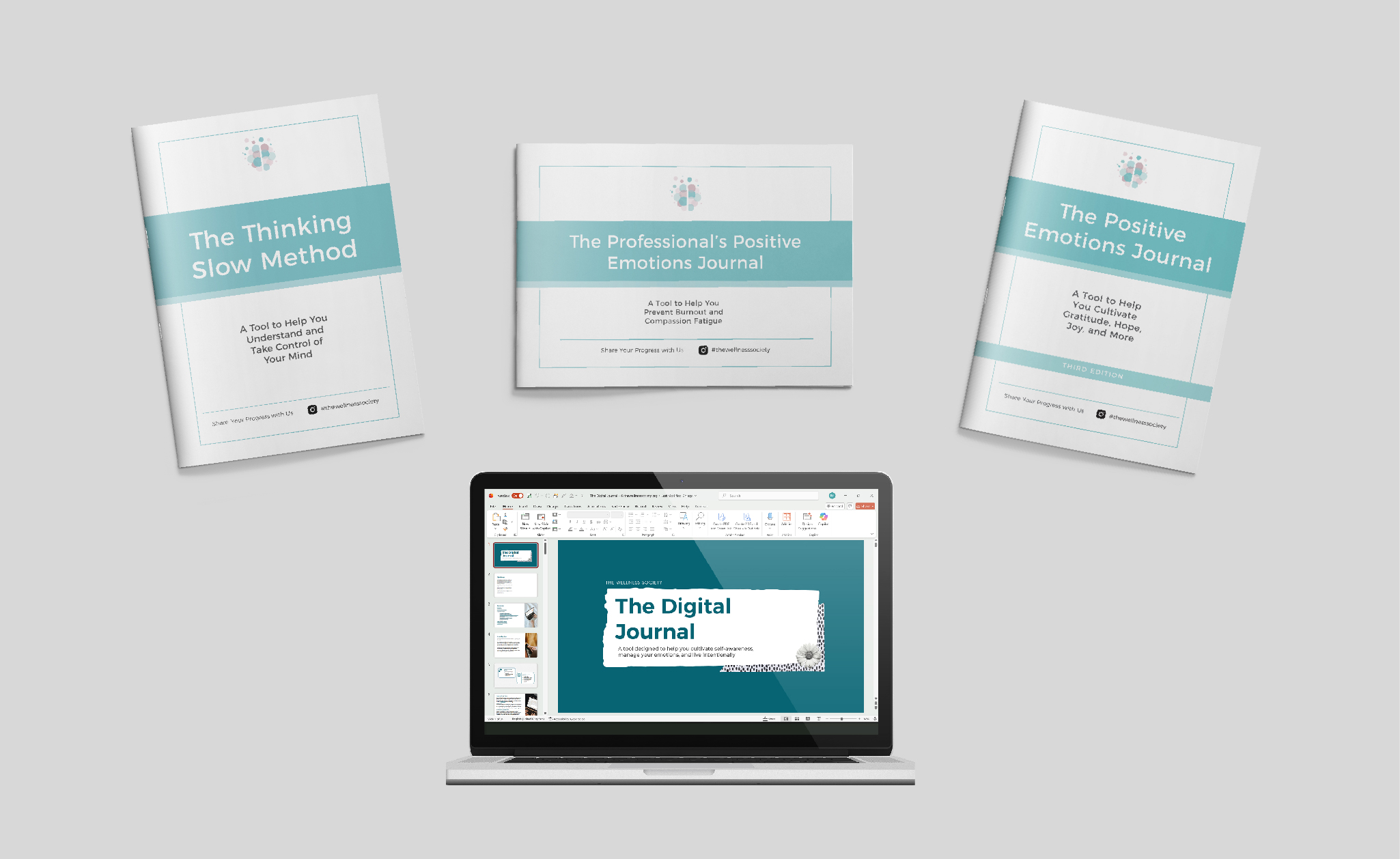
Here are some example journaling prompts from The Digital Journal inside The Mental Wellbeing Toolkit.
Coping With Distress in the Moment
- What was the trigger? What’s the chain reaction of events/thoughts/feelings?
- Am I engaging in unhelpful thinking patterns? If so, which ones?
- What’s the bigger picture surrounding my looping thoughts?
- What can I accept in this moment about myself, others, and the situation?
- What emotions do I notice arising right now?
- Where do I sense tension in my body? How could I release it?
- What coping skills could I use right now?
- What would an outsider’s perspective be of this situation?
- What is within my control right now that I can focus on?
- How am I likely to feel about this in one week’s time? What about a month’s or year’s time?
Challenging Cognitive Distortions and Unhelpful Stories
- What’s the evidence for and against this thought?
- In what ways is my mind exaggerating the negatives?
- What are other less scary possibilities?
- What would be a more balanced perspective of this situation?
- When have I experienced this emotion and it turned out not to mean what I thought it did?
- What thoughts might I be having if I were feeling calmer?
- Which extreme language such as “always”, “never”, “everyone” and “no one” is being used?
- What can I do to put space between me and my thoughts and slow down my thinking?
- In what ways could seemingly opposite perspectives be valid?
- What’s the worst-case scenario? What actions could I take to prevent it from happening?
Self-Awareness
- What are some of my core values?
- What’s one thing I’ve learned about myself recently?
- What patterns do I notice in my relationships?
- How do I usually respond to conflict?
- I felt “myself” recently when…
- I felt “not myself” recently when…
- What do I tend to avoid, and why?
- What habits are supporting my wellbeing?
- What parts of myself do I try to hide or minimize?
- What do I believe I “should” be doing? Do I actually agree with it?
Get 200 journaling prompts and a wide range of customisable templates in The Digital Journal
- Gratitude and Mood-Boosting
- Understanding, Processing and Managing Emotions
- Self-Acceptance and Self-Compassion
- Coping With Uncertainty
- Nurturing Your Spirituality
- Healing Trauma
5 Top Tips for Journaling
1. Use Insight-Oriented Language
“The journaling experience can sometimes be enhanced if there is space given to understanding more about the why of the situation, what the meaning might be and how to proceed effectively in the future.” – Sandra Wartski, licensed psychologist
In their narrative review of writing therapy, researchers Chiara Ruini and Cristina C. Mortara explain that people often benefit from using words such as “because,” “reason,” and “understand” when journaling. Such language encourages reflection, helping you make sense of your experiences.
For example: “I felt disappointed because I thought our friendship meant she would check in more often.”
As the researchers explain, “The benefits of writing stem from the activity of making sense of an emotional event, the acquisition of insight about the event, the organization and integration of the upheaval in one’s life path.”
2. Experiment With Perspective
Writing in the third person can help create emotional distance from painful experiences.
For example: “Rachel felt disappointed when she didn’t hear from Melissa.”
This perspective sometimes feels safer when discussing difficult topics. If you’re writing about traumatic events, first-person writing can be useful later in the process. Feel free to try both approaches and notice what feels most helpful in the moment.
3. Know When to Stop
It’s important to be mindful that writing about painful experiences can trigger intense emotions. It’s normal to experience sadness, crying, or emotional overwhelm during expressive writing exercises. If writing leads to persistent distress or causes you to become trapped cycles of rumination, pause the exercise and return to it at a later date.
If you find yourself becoming overwhelmed, you can also consider shifting into what licensed mental health counselor Mary Joye calls “reinvent mode” – a process of moving beyond venting and towards growth.
“I encourage clients to vent,” Joye explains, “but they have to end with how they would like to reinvent. Instead of just how do they feel about something, it’s how do they want to feel and how do they see themselves in the future.”
In other words, rather than ending with the problem, try ending with possibility. After expressing your frustrations, ask yourself:
- What would moving forward look like?
- What kind of person do I want to be in this situation?
- How would I like to feel?
This helps because it prevents expressive writing from staying stuck in pure emotional discharge. Remember, research suggests that part of what makes expressive writing effective is not just emotional expression, but the ability to organise experiences into a coherent narrative.
Reinventing supports this process by helping you transition from “what happened and how I feel about it” to “what this means for me” and “what I want to do going forward.”
4. Protect Your Privacy
People often write more honestly when they know their journal is private. Concerns about others reading entries can create anxiety, shame, or self-censorship.
Some people keep journals in secure locations. Others prefer digital journals. Some use Sipora Weissman's approach and destroy entries after writing.
Choose whatever feels safest.
5. Consider Cultural Context
Researchers Ruini and Mortara note that journaling exercises are not experienced in the same way across cultures.
In many Western cultures, self-focused reflection and personal goal-setting are widely encouraged. But in more collectivist cultures, emphasising individual desires can feel uncomfortable, conflicting with community-oriented values. Similarly, gratitude exercises can create feelings of indebtedness rather than wellbeing.
If you’re working with clients, ask them how comfortable they feel with different types of reflection. Does the exercise fit their values and cultural background? From there, the practice can be adapted in a way that supports the client.
Summary
“As a therapist who frequently recommends journaling to my clients, I know that many things contribute to healing and therapeutic recovery, but writing is one valuable tool that can be used as an enhancer of other tools, a bridge between sessions, and a way to connect more with the internal experience.” – Sandra Wartski, licensed psychologist
Spending your life living inside your head can sometimes mean becoming so absorbed in recurring thoughts and worries that they begin to affect your mental and physical wellbeing.
At the other extreme, constantly ignoring your emotions can create a different kind of inner tension that may resurface as stress, irritability, panic attacks or burnout.
Wellbeing lies in a balanced middle ground, and journaling can help you navigate away from both extremes. It offers a simple way for you to reduce mental distress, cultivate positive emotions, and contribute to bodily health.
You don't need amazing writing skills, perfect handwriting, or a daily commitment to feel the benefits. Experiment with different approaches and find out what works best for you.
We hope you found this guide helpful, and wish you all the best with your journaling practice.
If you're interested in practical resources for journaling, The Mental Wellbeing Toolkit includes tools for a variety of guided and unguided techniques to help you find an approach that works for you.
For professionals looking to integrate journaling into their practice, The Professional’s Mental Wellbeing Toolkit includes ready-to-use templates and guided exercises – designed to support client self-reflection, as well as your own.

About Rebecca
Rebecca Marks is the founder of The Wellness Society, a social enterprise that has supported thousands on their journey to mental wellbeing.
Her tools have been shared by the NHS and featured by Mind, the UK’s leading mental health charity. She comes from a career in mental health charity management, facilitating peer support programs and co-producing initiatives with service users.
Learn more about our story on the About page.