
Have you tried journaling before but haven’t been able to turn it into a consistent habit?
It may be because your approach to journaling isn’t varied or creative enough to keep your brain’s reward system engaged with the behaviour. Introduce as much creativity as you need to keep your journaling practice fresh and engaging – and you’ll build a habit that sticks.
Perhaps you also find it difficult to know where to start when it comes to writing about your thoughts and feelings. Keep reading to discover five simple creative journaling practices that can help with this. Feel free to adapt these practices in a way that feels right for you!
1. Hero’s Journey Storytelling
One creative journaling practice for processing challenging experiences is to reframe it as a hero’s journey. This is a narrative therapy-inspired approach that helps you step back from an event and see it through a new lens, as part of a larger story of meaning and transformation.
Start by choosing a specific event you want to reflect on. Then, transform yourself into a character. Give this character a name, an identity, and a world they inhabit. Creating a story using the third person can help to create some distance between you and the event you want to reflect on.
From here, reframe the event as the “call to adventure” – a disruption that enters the character’s life and sets the story in motion.
As the tale unfolds, outline the obstacles your character encounters as part of their journey. Along the way, introduce people, strengths, and values that support the character through their journey.
The turning point of the story could be a decision, a realisation, or an act of resilience that changes how the character relates to what they’re facing.
From there, guide the story towards an ending that focuses on personal growth. Focus on what the character has learned, how they’ve changed, and what strengths they now possess as a result of the journey.
You can write this as a short story, use voice notes, or even draw it as a storyboard. Remember, this story is only for you. It doesn’t need to be shared, and it doesn’t need to be perfect. So be as creative and imaginative as your mind will allow!
2. Mood Tracking Through Colours
Not everyone connects with long-form writing. Visual journaling methods can sometimes feel more approachable, especially during emotionally exhausting times.
A mood tracker uses colours, shapes, or symbols to represent your emotional states over time.
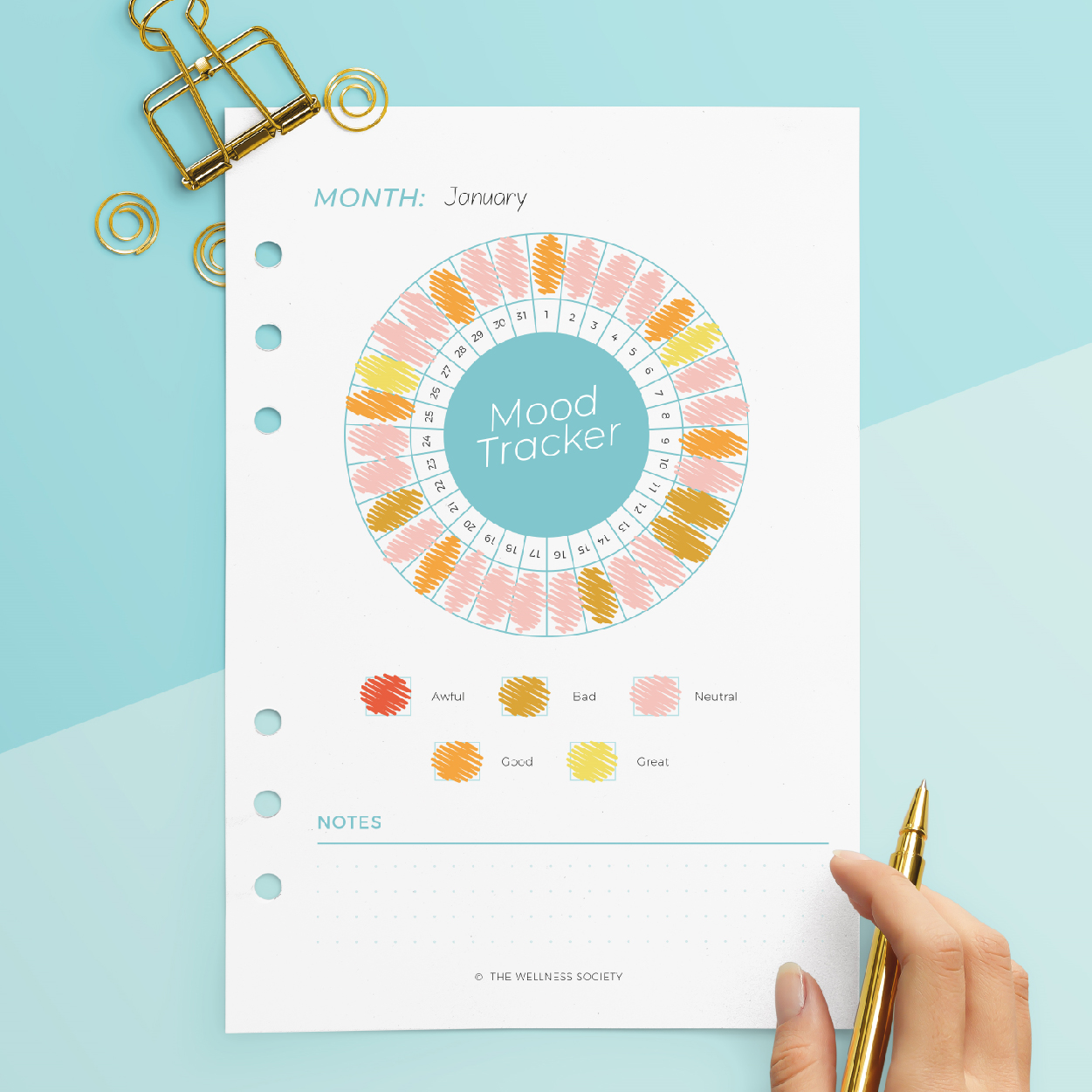
Over time, patterns often emerge. You might realise certain unexpected activities reliably boost your mood. You can then make an effort to incorporate more of these nourishing moments into your daily life.
This type of creative journaling encourages emotional awareness without requiring you to fully articulate every feeling in words.
3. Digital Journaling Tools
Digital tools are great for creative journaling.
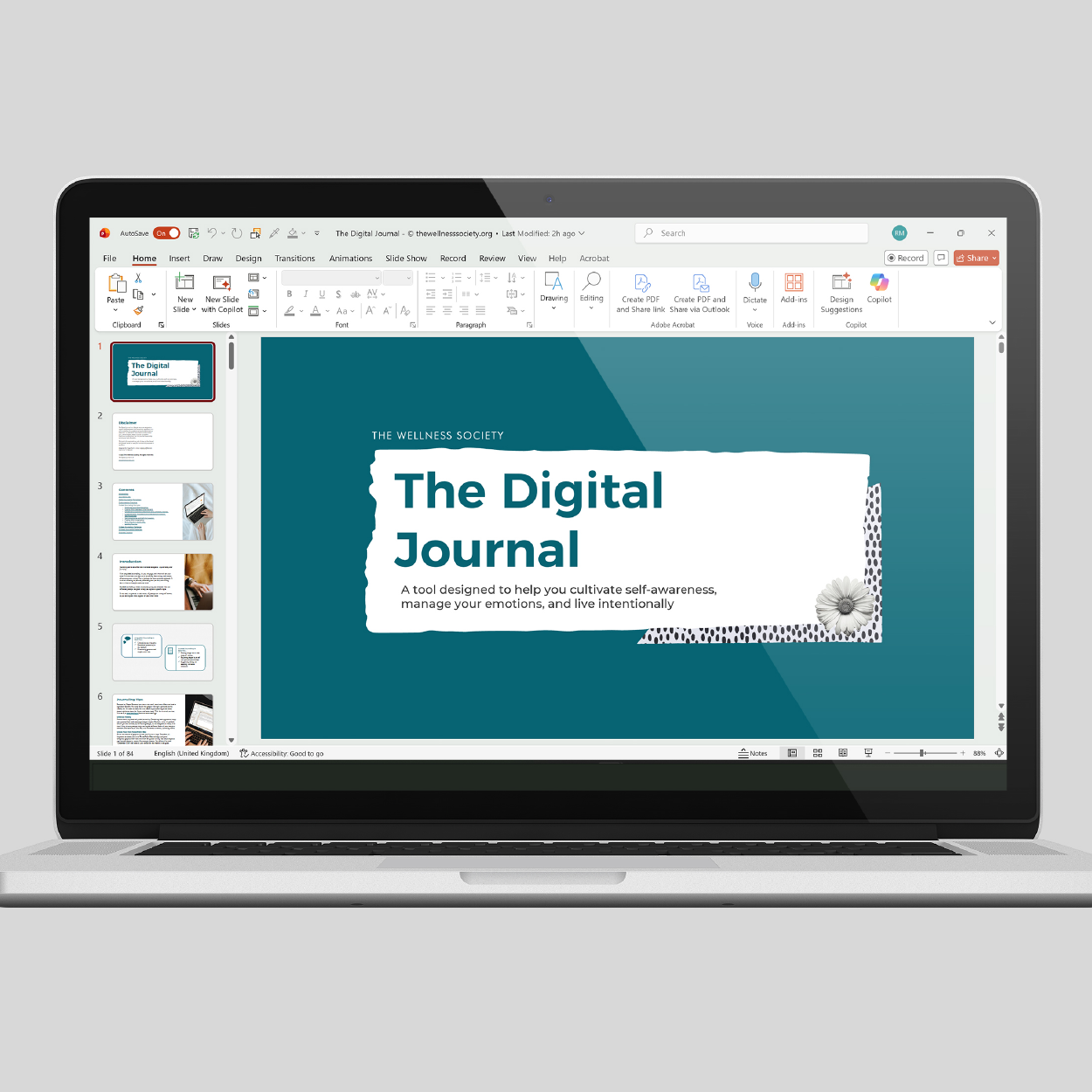
You can experiment with different apps, use notepad documents on your computer, or explore PowerPoint tools such as The Digital Journal that we offer inside The Mental Wellbeing Toolkit.
Many tools allow you to digitally customise entries with graphics, colour themes, and layout styles, allowing you to easily express your creativity.

Digital journaling makes it easier to search past thoughts and track emotional patterns without manually flipping through pages.
If you’re concerned about someone reading your paper journal, digital journaling can also offer peace of mind around the privacy of your inner world.
Another key benefit of digital journaling is accessibility. You can journal anywhere – on your phone during a commute, on your laptop at night, or even through PowerPoint voice notes when writing feels difficult.
4. Music and Song Lyrics
Listening to music that you find inspiring can help to increase the experience of flow as you journal.
Create a journaling playlist that evokes positive feelings for you. Use songs that you love listening to – it doesn’t matter what type of music it is.
Before you start writing, listen to the playlist for a few minutes. Bring your awareness to the feelings the music is creating in your body and mind. Let the emotions be present, then start your writing practice.
Let the music continue to play as you write; your journaling practice can flow along with it.
You could adapt this practice by writing song lyrics, using the thoughts and emotions that arise for you to create short verses and a chorus.
5. Dialogue Journaling
Dialogue journaling is a creative journaling practice that involves writing conversations between different parts of yourself.
Aligning with internal family systems therapy (IFS), this technique can help you explore internal conflict while cultivating greater self-compassion.
For example:
- The inner critic vs. the self-protective voice
- The anxious part vs. the rational part
- The present self vs. future self
A journal entry might look something like this:
- Anxious part: “I can’t stand not knowing what will happen.”
- Rational part: “You’ve handled uncertain situations before. What else has turned out better than you’ve expected? What’s within your control that you can focus on right now?”
Like the hero’s journey method, this approach can create emotional distance from overwhelming thoughts while helping you respond to them more constructively.
Flexibility Is Key to a Sustainable Journaling Practice
One of the biggest misconceptions about journaling is that it must happen every day to “count.”
Consistency can be helpful, but flexibility matters more than perfection. A sustainable journaling practice is one that:
- Can be adapted to different emotional states (e.g. reflective, minimal, or structured)
- Doesn’t become another source of pressure
- Fits naturally into daily life
Some people journal for five minutes once a week. Others keep multiple formats depending on their emotional needs. Both approaches are completely valid.
Mental health tools work best when they’re adaptable, realistic, and personal. Journaling is no different. Experiment and see what works best for you.
Summary
There’s a solid body of psychological research suggesting that journaling can help us better understand and regulate our emotions (in the literature, it’s often referred to as expressive writing or written emotional disclosure).
By adapting your journaling methods to include storytelling, mood tracking, digital tools, music, or dialogue journaling, you can keep your practice fresh – and build a habit that lasts.
Get Creative Journaling Tools Today
Want to stay consistent with journaling? The Mental Wellbeing Toolkit contains several journaling tools – experiment and discover what works best for you.


Co-Authors

About Lynsey
Lynsey Giles is a Positive Health Scholar studying for a Masters of Science in Positive Health Coaching in the Royal College of Surgeons, Dublin. She’s also a 250hr Yoga and Breathwork Teacher, accredited by the Yoga Alliance.
She’s passionate about the incredible intelligence our bodies hold and how evidence-based positive interventions and simple structures can cultivate wellness in our daily lives. You can contact her via Instagram.

About Rebecca
Rebecca Marks is the founder of The Wellness Society, a social enterprise that has supported thousands on their journey to mental wellbeing.
Her tools have been shared by the NHS and featured by Mind, the UK’s leading mental health charity. She comes from a career in mental health charity management, facilitating peer support programs and co-producing initiatives with service users.
Learn more about our story on the About page.