The internet is full of “Buddha quotes.”
While many of them are inspiring, a significant amount were never actually said by the Buddha. A lot reflect modern self-help culture more than authentic Buddhist philosophy.
When it comes to quotable Buddhist texts, some are much easier to pull concise, meaningful sayings from than others. The Dhammapada is perhaps the most quotable, because it consists of short, standalone verses. In this article, we’ll explore 12 direct quotes from this text along with possible interpretations.
Buddhist Quotes on Taming the Mind
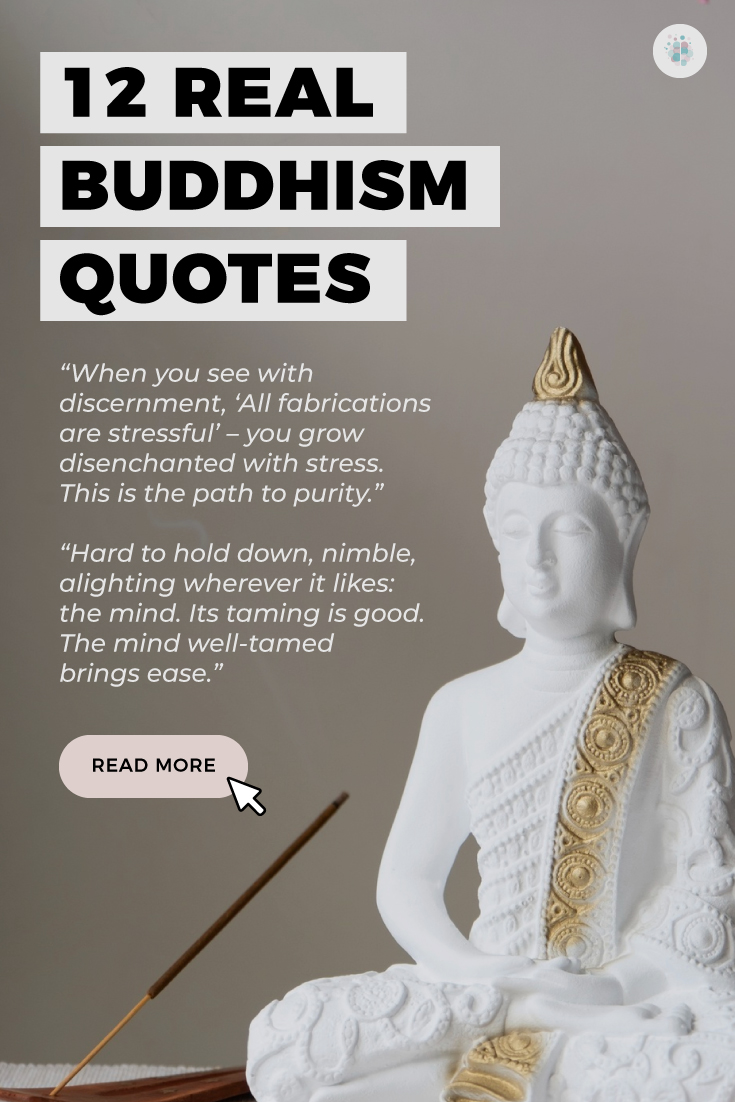
“When you see with discernment, ‘All fabrications are stressful’ – you grow disenchanted with stress. This is the path to purity.”
“Hard to hold down, nimble, alighting wherever it likes: the mind. Its taming is good. The mind well-tamed brings ease.”
“Just as a silver smith step by step, bit by bit, moment to moment, blows away the impurities of molten silver – so the wise man, his own.”
These quotes emphasise the challenge and importance of mastering our mind. The mind is naturally restless and taming it “brings ease”.
There’s a striking point here: all fabrications are stressful. The Pali word for the concept of “fabrications” is sankhara. It's a complex term that means “that which is put together” or “conditioned thing.”
It includes all thoughts, feelings, and perceptions. Because they’re conditioned (arising due to causes), their nature is impermanence (anicca). And because they’re impermanent, they cannot provide lasting satisfaction.
Does this imply that we shouldn’t strive to savour positive mental states?
Definitely not. In Buddhism, the attitude toward pleasures isn’t “reject them completely.” It’s a middle approach – often called the Middle Way. In a nutshell, it’s about:
- Enjoying pleasant experiences when they arise
- Not depending on them for your happiness
- Not clinging to them or chasing them obsessively
- Not pushing them away out of fear or guilt
The core problem is the mental habit of:
- “I need this to be happy”
- “I can’t lose this”
- “I want more, more, more”
The same principle that applies to pleasure also applies to life’s hardest changes: aging, illness, and loss.
- You care for your health, but don’t expect control over it
- You cherish people, knowing time is limited
- You cultivate mindfulness, instead of living in fear of loss
This shift in perspective is hard, requiring effort.
Short-term, reactive habits (craving, rumination, anger) tend to reinforce dissatisfaction (dukkha).
Practices like meditation and cultivating wisdom lead to more stable, long-term wellbeing. But they require consistent effort, especially at the beginning.
Together, these teachings remind us that spiritual progress is a disciplined, mindful process centred on understanding and mastering the mind.
Buddhism Quotes on Craving
“One who stays focused on the beautiful, is unrestrained with the senses, knowing no moderation in food, apathetic, unenergetic: Mara overcomes him as the wind, a weak tree.”
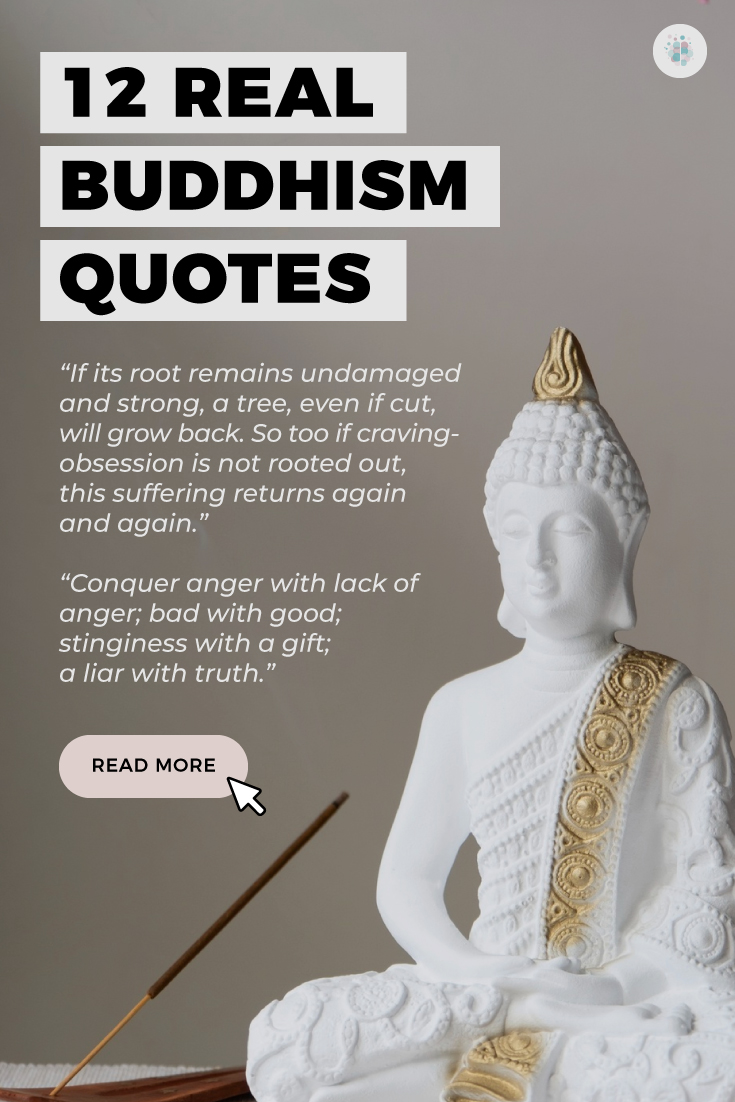
“If its root remains undamaged and strong, a tree, even if cut, will grow back. So too if craving-obsession is not rooted out, this suffering returns again and again.”
“Riches ruin the man weak in discernment, but not those who seek the beyond. Through craving for riches, the man weak in discernment ruins himself as he would others.”
These teachings emphasise the destructive power of craving.
Overindulgence leaves a person vulnerable, like a weak tree battered by the wind, allowing Mara to take control.
In Buddhism, Mara is often referred to as “The Tempter,” but that's a simplification. He's best understood as the personification of all the forces (both internal and external) that hinder spiritual practice.
In the Buddhist framework, alongside craving, these hindering forces include:
- Aversion (irritation, anger, resistance to discomfort).
- Restlessness (an inability to stay present).
- Sloth (laziness, low energy, mental dullness).
- Unwholesome peer pressure (being influenced by people driven by greed, anger, or delusion).
“Discernment” (often linked to wisdom, paññā) means seeing things as they are – i.e., having a solid grasp of the Four Noble Truths. So, someone with riches and “weak in discernment” may become attached, greedy, or fearful of loss. But riches don’t ruin everyone. They amplify what’s already there. Without wisdom, they simply feed craving.
Together, these passages highlight a central Buddhist principle: true freedom and lasting peace require addressing the root causes of desire and attachment in the mind.
Buddhism Quotes on Anger
“Conquer anger with lack of anger; bad with good; stinginess with a gift; a liar with truth.”
“Hostilities are stilled through non-hostility: this, an unending truth.”
“By telling the truth; by not growing angry; by giving, when asked, no matter how little you have: by these three things you enter the presence of devas.”
Buddhism teaches that responding to hostility with wisdom, patience, and kindness transforms both the mind and our surroundings.
This principle is echoed in several modern therapeutic approaches. Techniques used in cognitive behavioural therapy (CBT), non-violent communication (NVC), and mindfulness-based therapies encourage us to observe our thoughts and emotions, pause before reacting, and choose responses that reduce harm rather than escalate conflict.
In Buddhism, devas are celestial beings, often translated as “gods.” They inhabit higher realms of existence characterised by great pleasure, beauty, and long life. However, unlike the eternal gods of some religious traditions, they aren’t immortal. They remain subject to impermanence (anicca) and the law of karma, meaning their existence in these realms eventually comes to an end.
We generate wholesome karma by consistently practicing virtues such as truthfulness, generosity, and restraint from anger. This may lead to rebirth in more favourable realms, including the realms of the devas.
At the same time, Buddhism emphasises that even these heavenly realms are not the final goal. The deeper aim of the Buddhist path is liberation from all conditioned realms of existence: nirvana.
Buddhism Quotes on Karma and the Afterlife
“When you’ve done good and gone from this world to the world beyond, your good deeds receive you.”
“In both worlds the merit-maker delights. He delights at the thought, ‘I’ve made merit.’ Having gone to a good destination, he delights all the more.”
“Knowing this body is like foam, realizing its nature – a mirage – cutting out the blossoms of Mara, you go where the King of Death can’t see.”
These passages similarly emphasise the importance of virtuous action in shaping both this life and what comes after.
The imagery of the body as foam points to the impermanent nature of worldly phenomena. Just as foam on water appears solid but quickly dissolves, the physical body and the identities we cling to are temporary and constantly changing.
Recognising this helps us loosen our attachment to possessions, status, and even the idea of a fixed self.
When these illusions are seen clearly, we become less vulnerable to the influence of Mara (the forces that hinder spiritual practice).
Like other spiritual texts such as The Gospel of Thomas, it suggests that eternal life (going where the “King of Death can’t see”) is attainable by seeing past the illusions that hide our true nature.
In early Buddhist texts (particularly in the Abhidhamma), the Buddha is described as having developed extraordinary meditative insight that allowed him to observe the workings of karma across lifetimes.
Through deep concentration, it’s said that he could recall his past lives and perceive how beings arise and experience conditions according to the ethical quality of their actions.
Rather than seeing this as mystical speculation, the Buddha presented it as a practical framework for understanding cause and effect, encouraging ethical conduct.
Interestingly, these concepts resonate with some modern scientific investigations into phenomena such as near-death experiences (NDEs).
While these studies are still heavily debated, they align with the growing interest in post-materialist theories of consciousness – the idea that consciousness may be a fundamental feature of reality rather than just a product of brain activity.
Keep Learning
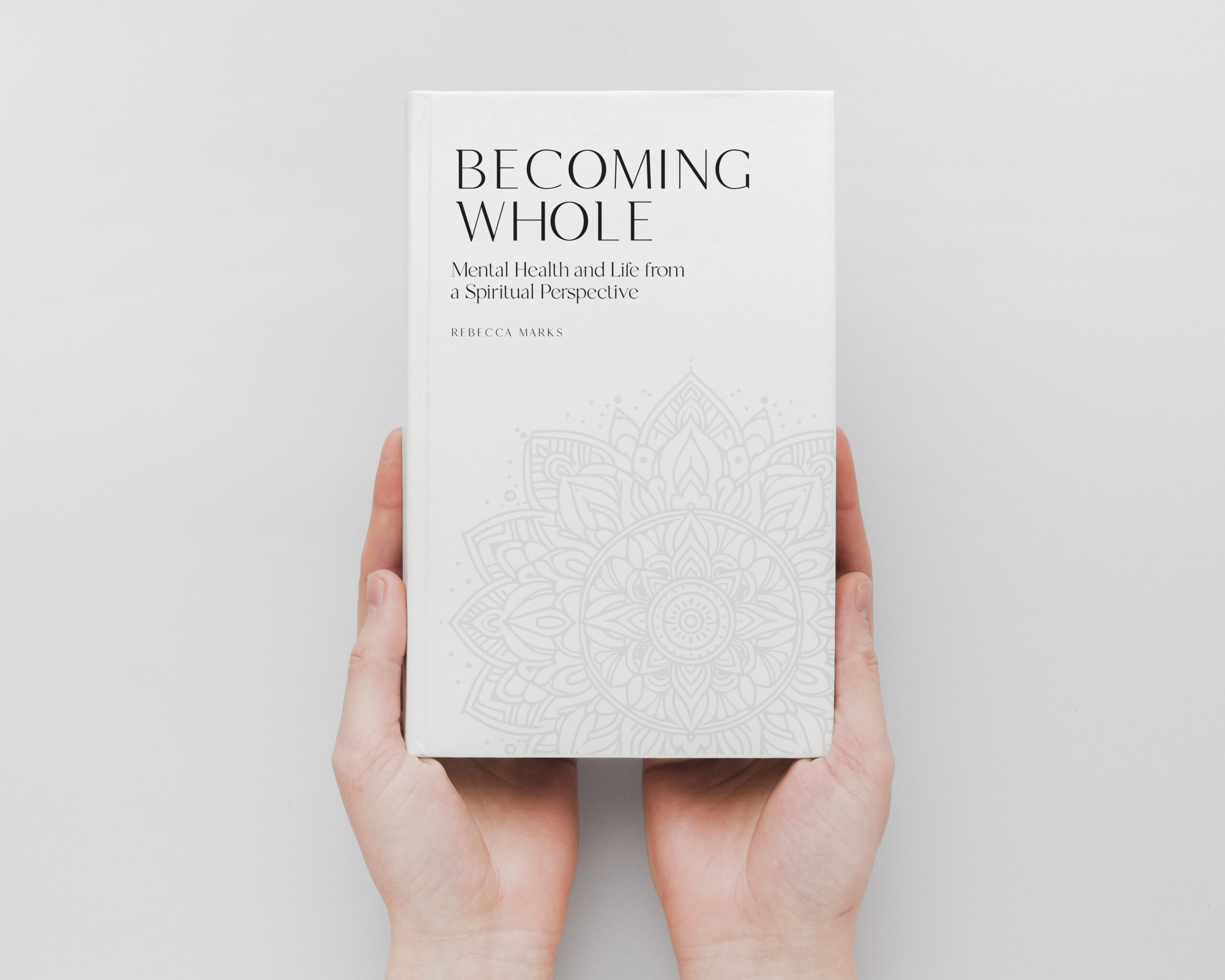
In Becoming Whole, I delve into these themes in more detail. You’ll discover:
- How mystical experiences such near-death experiences (NDEs) relate to spiritual teachings
- The deeper meaning of karma in the Buddhist framework
- The distinction between wholesome and unwholesome forms of craving in Buddhism
If these topics intrigue you, start your journey today.


About Rebecca
Rebecca Marks is the founder of The Wellness Society, a social enterprise that has supported thousands on their journey to mental wellbeing.
Her tools have been shared by the NHS and featured by Mind, the UK’s leading mental health charity. She comes from a career in mental health charity management, facilitating peer support programs and co-producing initiatives with service users.
Learn more about our story on the About page.
Save for Later