Download Your Free PDF
This content is also available as a free 8-page PDF, which you can access below.
Introduction
The year is 1945.
Near the Egyptian town of Nag Hammadi, two brothers are digging for fertilizer when they stumble upon a sealed clay jar buried deep in the sand.
They pause.
Should they open it? Local superstition warns that such jars can contain bad spirits. For a moment, fear holds them back.
But curiosity prevails.
Inside, they discover 13 leather-bound ancient manuscripts written in Coptic, the ancient Egyptian language.
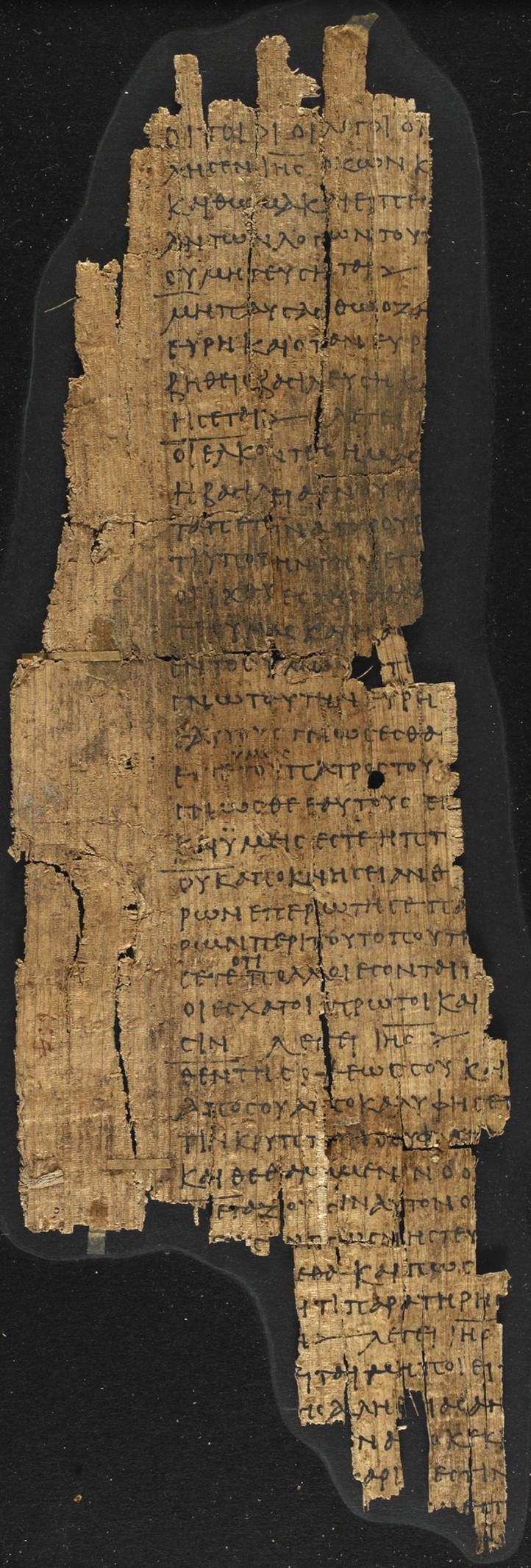
Source: Wikimedia Commons, CC BY 1.0
Among them was a text that would puzzle scholars for decades: the Gospel of Thomas.
Unlike the New Testament gospels, the Gospel of Thomas is not a story of Jesus' life. Instead, it's a compilation of 114 cryptic sayings, beginning with the bold claim:
"Whoever finds the interpretation of these sayings will not experience death."
In this online guide, we'll explore the text's background, four interconnected themes, and interpretations of key sayings. We'll adopt a comparative mysticism lens, highlighting parallels with other spiritual traditions such as Buddhism and Taoism.
How Does the Gospel of Thomas Relate to Other Christian Texts?
The Gospel of Thomas relates to other Christian texts through a paradoxical blend of familiarity and radical divergence.
Scholars generally agree that about 50 of the 114 sayings in the Gospel of Thomas have parallels in the gospels Matthew, Mark, and Luke.
This has led scholars to debate where those similarities come from. One possibility is that the author drew directly from the other gospels, paraphrasing their content.
Another is that the author preserves an earlier, independent stream of oral tradition – sayings passed down separately from the stories about Jesus' life. This second theory connects to what scholars call the Q source, a hypothetical collection of Jesus' sayings that Matthew and Luke are thought to have used alongside Mark.
Theologically, it diverges from the New Testament because salvation primarily comes not through faith in Christ, but through interpreting cryptic sayings which spark recognition of our own inner divinity.
4 Key Themes in The Gospel of Thomas
Theme 1: Eternal Life
As mentioned, the Gospel of Thomas opens with this striking claim:
Saying 1: And he said, "Whoever finds the interpretation of these sayings will not experience death."
Here, eternal life is not framed as a reward for the afterlife. It's something we can attain through the realisation of truth right now.
In other words, "death" is a metaphor for spiritual ignorance, and "life" is the realisation of our inner divinity.
Saying 18: The disciples said to Jesus, "Tell us how our end will be." Jesus said, "Have you discovered, then, the beginning, that you look for the end? For where the beginning is, there will the end be. Blessed is he who will take his place in the beginning; he will know the end and will not experience death."
The disciples question here seems practical. They want to know about their future, about what happens when they die. In response, Jesus refocuses their attention on the exact nature of "the beginning".
To "take his place in the beginning" doesn't mean simply remembering where we came from. It means abiding there. To "abide in the beginning" is to eliminate contrast.
No before and after. No here versus there. No self and other.
From that vantage point, beginning and end are no longer opposites. They’re two aspects of a single reality. And this single reality is the source from which all things emerge.
This is why such a person does not experience death. Death is a function of separation, the perception that the self is an isolated fragment moving toward a fixed endpoint.
The one who dwells in the beginning no longer identifies with that fragment. They have awakened to what they were before separation arose. And what has no beginning cannot truly end.
Taoist Parallels
This is echoed in the Taoist text, the Tao Te Ching, which states:
"The Tao gives birth to the One.
The One gives birth to the Two.
The Two give birth to the Three.
The Three give birth
to the ten thousand things."
The Tao is understood as the source from which all things emerge.
Dwelling "in the beginning" is akin to remaining aligned with the Tao, the unbroken source before duality, differentiation, the proliferation of forms.
While the Tao emphasises alignment with the natural unfolding of reality and the Gospel of Thomas emphasises spiritual realisation of our divine spark, both point to transcending ordinary distinctions of time, mortality, and division.
Modern Parallels
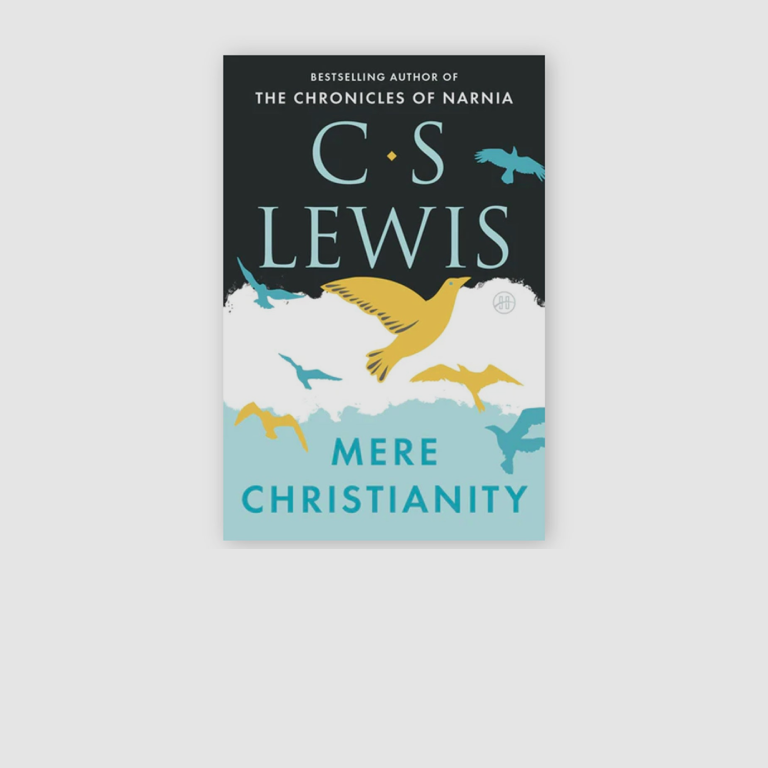
A modern parallel is seen in Mere Christianity (1952) by C.S Lewis:
"If you picture time as a straight line along which we have to travel, then you must picture God as the whole page on which the line is drawn."
Lewis uses this image to explain the traditional Christian understanding of God's eternity.
But it also illuminates what the Gospel of Thomas means by taking one's place in the beginning. The person who dwells there has stepped onto the page itself. They've stopped identifying exclusively with the moving point on the line. They remember the page, and in that remembering, death loses its grip.
Theme 2: Non-Duality as Divine Reality
The theme of eternal life directly ties into the topic of non-duality, which is explored in the Gospel of Thomas through multiple cryptic sayings such as:
Saying 22: Jesus said to them, "When you make the two one, and when you make the inside like the outside and the outside like the inside, and the above like the below, and when you make the male and the female one and the same […] then will you enter the kingdom."
Non-duality can essentially be understood as the elimination of contrast.
In ordinary perception, we experience reality through spectrums of polarities: black and white, self and other, inner and outer. Many of the sayings in the Gospel of Thomas suggest that spiritual awakening occurs when these apparent opposites are reconciled in a higher state of awareness.
Buddhist Zen Koans similarly encourage us to move beyond dualistic thinking. When a Zen master asks, "What is the sound of one hand clapping?" the aim is to move beyond the logical mind's dependence on opposites.
The concept of non-duality is elegantly expressed through the Taoist yin and yang symbol.
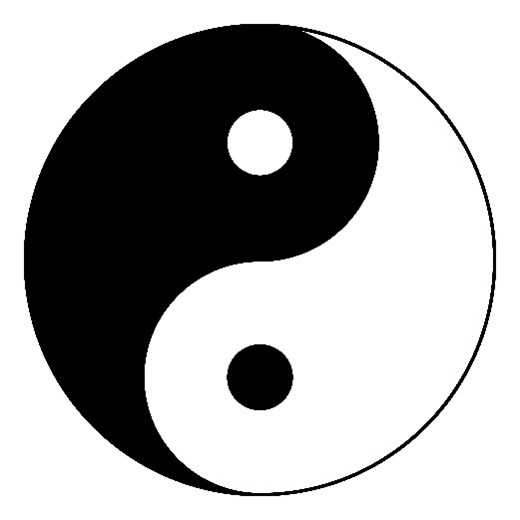
This symbol communicates that:
- Yin and yang appear as opposites (i.e., light and dark).
- Each contains a seed of the other, showing their interdependence; the existence of one gives rise to the other.
- Both emerge from a single underlying whole, as shown through the enclosing circle.
How Contrast Creates Suffering
"Out beyond ideas of wrongdoing
and rightdoing there is a field.
I'll meet you there.
When the soul lies down in that grass
the world is too full to talk about."
– Rumi
Suffering often arises when we perceive the world in stark contrasts.
In everyday life, we label things as good or bad, right or wrong, success or failure. In cognitive behavioural therapy (CBT), this is referred to as black-and-white thinking – a cognitive distortion that can fuel low mood, anxiety, and emotional instability.
As Heraclitus put it: "Change is the only constant in life". Clinging to one side of a polarity creates tension because it fixes the self to temporary outcomes.
If your sense of worth is strongly tied to achievement, setbacks feel agonising.
If you rely too much on others’ approval, criticism triggers distress.
If you rigidly cling to control, uncertainty spikes anxiety.
The mind becomes trapped in cycles of judgement, comparison, fear.
By moving beyond dualistic thinking, distressing mental states begin to dissolve. This is why mindfulness teachers emphasise cultivating an attitude of non-judgement. Non-judgement means observing your thoughts and emotions without automatically labelling them.
Over time, this gives rise to a greater sense of equanimity, where thoughts, emotions, and experiences can arise and pass without completely hijacking our inner state.
Theme 3: The Importance of Non-Attachment for Spiritual Awakening
Saying 42: Jesus said, "Become passers-by."
This saying encourages a sense of non-attachment.
To "become passers-by" is to move through life without clinging to material possessions, social roles, desires for experiences.
It suggests a way of being in which we participate fully in the world yet refuse to anchor our identity in what is temporary.
Non-attachment is considered a wise virtue in various spiritual traditions such as Buddhism, Taoism, and Hinduism.
In Buddhism, unsatisfactoriness (dukkha) is rooted in craving and grasping. The antidote to this is to cultivate non-attachment, allowing thoughts, emotions, and experiences to come and go without clinging to them or pushing them away.
In Taoism, the concept of wu wei (often translated as "effortless action"), also aligns with this saying. Wu wei means acting without forceful striving, without trying to control everything. By flowing with life rather than attempting to dominate it, we move in harmony with the natural order (the Tao).
Our culture actively encourages attachment. Because of our environment, attachment becomes our default psychological state. Cultivating non-attachment often requires deliberate practice and reflection.
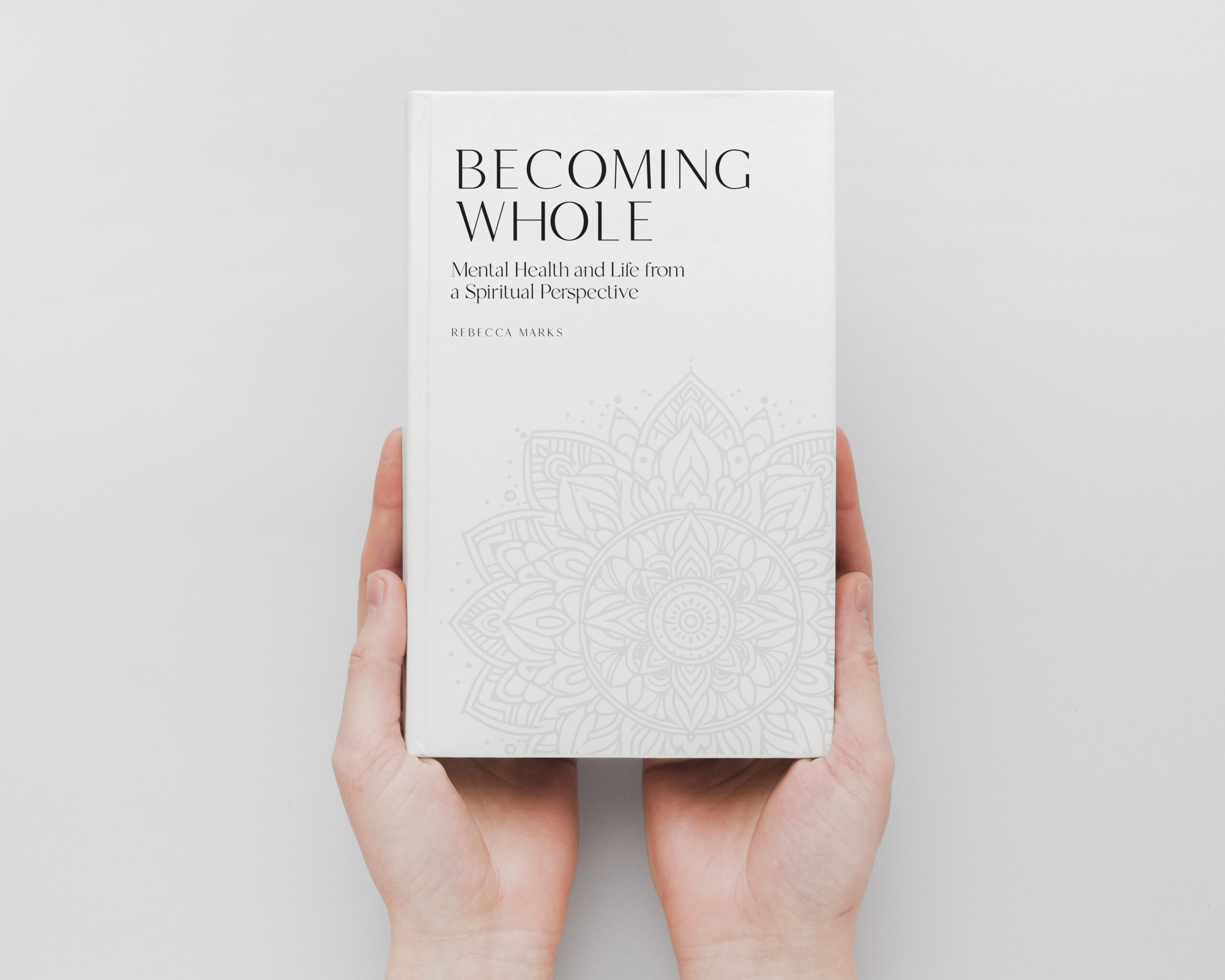
In Becoming Whole, I delve into this and outline practical steps to cultivate what Buddhists call wholesome desire, channelling our wants in ways that align with our higher values.
To summarise, to become a passer-by is to stand in the world lightly. It’s to be aware that everything we encounter is part of a passing scene.
When we stop clinging, we’re no longer defined by what we temporarily hold. We rediscover the deeper self that is not defined by any circumstance whatsoever.
Theme 4: The Importance of Solitude for Spiritual Awakening
Saying 49: Jesus said, "Blessed are the solitary and elect, for you will find the kingdom. For you are from it, and to it you will return."
Saying 75: Jesus said, "Many are standing at the door, but it is the solitary who will enter the bridal chamber."
Here, the Gospel of Thomas emphasises solitude as a path to spiritual insight. The "solitary and elect" are those who cultivate stillness, silence, inner focus. This is echoed across many spiritual texts:
"Be still, and know that I am God." – Psalm 46:10
"Nothing in all creation is so like God as stillness." – Meister Eckhart
"Humility; pridelessness; nonviolence… freedom from entanglement with children, wife, home and the rest… aspiring to live in a solitary place; detachment from the general mass of people; accepting the importance of self-realization." – Bhagavad Gita 13:10
This explains the meditative retreat and solitary practice of Buddhist monks and nuns, where withdrawal cultivates insight into the nature of reality.
It also ties directly into the previous theme of non-attachment. Solitude includes a form of non-attachment to people. Not in that we become indifferent to others; it’s about releasing possessive attachment.
Attachment sounds like:
- I need you to complete me.
- You must behave a certain way.
- My identity and wellbeing depend on your presence.
Non-attachment sounds like:
- I love you, but I do not possess you.
- I care for you, but I do not cling to you.
- My worth is not dependent on your presence.
In Christian mysticism, the highest form of love is not possessive. It’s agape – love that gives without grasping.
When the Gospel of Thomas speaks of "the solitary," it doesn’t mean cutting ourselves off from human connection. It means changing our relation to it. Becoming inwardly whole enough that relationships are no longer based on need or fear. And from that state of wholeness, we can love more freely.
Here’s another striking saying that expands on this idea:
Saying 101: Jesus said, "Whoever does not hate his father and his mother as I do cannot become a disciple to me. And whoever does not love his father and his mother as I do cannot become a disciple to me."
This isn’t a literal instruction to despise our parents. Instead, it’s a metaphor for the non-attachment required for spiritual awakening. To "hate" them means to dis-identify, to let go of clinging.
By releasing our dependence on people, possessions, and identities, the soul becomes free to find the kingdom within.
Summary
The Gospel of Thomas offers something rare among early Christian texts: a portrait of Jesus as a wisdom teacher.
Unlike the narrative gospels of the New Testament, this text focuses on sayings attributed to Jesus. There’s little emphasis on biography, miracles, or historical events. Instead, it’s about perception in the here and now – learning to see reality differently.
One quote from this text that beautifully summarises the central idea is:
"The kingdom is inside of you, and it is outside of you. When you come to know yourselves… you will realise that it is you who are the sons of the living Father."
The kingdom is not a physical realm to be entered after death. It’s a state of awareness, a realisation of unity with the divine source.
The sayings in the Gospel of Thomas are deeply cryptic, demanding patience, contemplation, and a willingness to sit with paradox.
The path to "entering the kingdom" involves moving beyond dualistic thinking, beyond attachment, beyond identities constructed through possession, status, and even relationships.
As we've seen, these teachings resonate strongly with other contemplative traditions such as Buddhism and Taoism. Like many wisdom traditions, it suggests that spiritual awakening begins when we start to see past the illusions that hide our true nature.
Keep Learning
For a deeper exploration of these ideas, including their presence in other spiritual traditions, their relationship with modern neuroscience, and their connection to broader metaphysical theories of reality, be sure to check out Becoming Whole today.


About Rebecca
Rebecca Marks is the founder of The Wellness Society, a social enterprise that has supported thousands on their journey to mental wellbeing.
Her tools have been shared by the NHS and featured by Mind, the UK’s leading mental health charity. She comes from a career in mental health charity management, facilitating peer support programs and co-producing initiatives with service users.
Learn more about our story on the About page.
Save For Later