
Every January, it starts the same way.
A fresh year. A surge of optimism. New goals journaled about: This is the year I’ll do it. We overhaul routines, set ambitious intentions, join the gym – and then, momentum fades. By February, motivation dips. By March, we drift towards old habits.
Sound familiar? Rest assured that this doesn’t mean you’re lazy or “bad at discipline.” In fact, it’s your brain doing exactly what it evolved to do.
Understanding why motivation rises and falls – and how to work with your brain instead of against it – is the key to making change stick. Keep reading to learn more about the science of motivation and how to create change that lasts.
New Goals and Dopamine
When you set a new goal, your brain releases dopamine.
Dopamine isn’t the “pleasure chemical” it’s often described as. It’s more accurately a motivation and anticipation chemical.
Dopamine spikes when:
- You start something new
- You experience novelty
- You imagine a reward
The initial burst of enthusiasm you feel in early January is dopamine doing its job.
The problem is that dopamine drops once something becomes familiar. Journaling feels repetitive. Healthier eating loses its shine. The gym no longer feels exciting.
When novelty fades, the brain stops supplying motivation on demand.
This is where many people assume things like “I’m just not disciplined enough.” Instead of getting caught up in self-critical thinking, shift your focus to understanding how you’re wired, and what you can do about it.
An Evolutionary Perspective
From an evolutionary psychology perspective, the motivation fade makes perfect sense.
Our ancestors survived by seeking new resources and exploring new environments.
The brain evolved to prioritise short-term gains and novelty, not long-term consistency in abstract goals like “personal growth.”
When motivation drops, your brain isn’t sabotaging you. It’s conserving energy. The mistake we make is expecting motivation to be constant.
Instead, sustainable behaviour change comes from building structures that don’t rely on motivation at all.
Who's Most Prone to Motivation Bursts?
While all human brains are wired to respond to novelty, some people experience more extreme cycles of enthusiasm and collapse. It’s a natural variation in temperament and personality.
- High novelty seekers. Often thrive on new experiences, ideas, or challenges. Excited by the start of projects, new goals, or “big plans.”
- Highly sensitive people. High highs (bursts of excitement, inspiration, energy) and low lows (demotivation, self-doubt, overwhelm).
- Those diagnosed with ADHD. Explosive bursts of focus on new projects, then rapid decline in engagement as tasks become repetitive.
- Idea-focused personalities. Excited by possibilities rather than execution. Early stages of planning bring dopamine surges, with follow-through prone to inconsistency unless systems are in place.
The solution is the same for all types. It’s about harnessing your initial enthusiasm while working with your brain to build consistency over the long term.
4 Ways to Work with Your Brain
The key to making resolutions stick is shifting focus away from motivation and toward four key foundations:
- Systems
- Values
- Reflection
- Novelty
Let’s break these down.
1. Systems: Motivation Follows Action, Not the Other Way Around
One of the most important psychological insights which we emphasise in The Lasting Habits System is this: motivation follows action.
Waiting to “feel motivated” is a losing strategy. This is especially important if you’re struggling with poor mental wellbeing. When we’re experiencing low mood or anxiety, the brain’s Drive System is often underactive. Expecting yourself to feel energised before taking action keeps you stuck.
Professor Paul Gilbert, the founder of Compassion Focused Therapy (CFT), introduced The Drive System as part of his three-system model of emotion regulation, which includes:
- Drive System (focused on motivation, achievement, pursuit)
- Threat System (focused on danger, protection, shame)
- Soothing System (focused on safety, connection, contentment)
Psychologically, the Drive System is activated through movement, engagement, and feedback, not through thinking alone.
When the system is low (as in cases of poor mental wellbeing), inactivity reinforces inactivity; when it’s gently engaged, even minimal action can start to restore momentum. Motivation follows action. Small actions signal safety to the nervous system, which then begins to re-engage feelings of motivation.
So, it’s important to focus on creating systems that influence actions.
Ask yourself:
- What reminders do I need (alarms, habit trackers, notes)?
- What habit triggers could I use (e.g., environmental cues: a journal on your bedside table, trainers by the door, water bottle on your desk)?
- How can I make the “right” action the easiest, most obvious one (e.g. keep apps you want to avoid off your home screen)?
- Which “if-then” rules could I implement?
If-Then Rule Examples
If-then rules help you stay consistent when friction arises.
- If I don’t have time, then I reduce to five minutes only.
- If I skip a day, then I restart the next day with no guilt.
- If I feel fatigued, then I focus more on stretching.
2. Values: Anchor Your Habits to Who You Want to Be
When motivation dips, habits that aren’t deeply anchored in your personal values are the first to go.
Instead of asking: “What do I want to achieve?” Ask: “What kind of person do I want to become?”
To support this, try writing a simple mission statement. A few sentences are enough. For example:
“I am someone who values learning. I believe that understanding myself and the world helps me make better decisions, fuels curiosity, and adds richness to life. This year, I will listen to at least one audiobook per month.”
Return to this statement when you notice your behaviour shifting towards older patterns. Values create meaning, and meaning sustains effort far longer than excitement ever will.
3. The Keystone Habit: Regular Reflection
If there’s one habit that supports all others, it’s regular reflection.
Reflection turns experience into insight, helping you understand why you behave the way you do.
The journey to sustainable behaviour change is often full of lapses. In The Lasting Habits System, we include a section on Learning from Habit Lapses. It’s about curiosity, analysis, course correction.
Regular reflection is essential for gradually increasing your consistency as you revert to previous behaviours. It helps you keep your goals alive and flexible rather than rigid and fragile.
Set a weekly, bi-monthly or monthly time to check in and reflect on your progress.
4. Novelty: Keep Feeding the Brain
Because your brain is wired to seek novelty, the solution isn’t to eliminate it. It’s to strategically reintroduce it to increase enjoyment. Novelty helps keep dopamine flowing without requiring a brand-new goal every month.
Here are some ideas for how to add novelty to goals:
- Journaling. Rotate journal prompts and formats (paper, digital). Build a Pinterest board for inspiration. Get new journaling supplies.
- Healthy eating. New recipes, new cookbooks, new food blogs. Create a Pinterest board. Visit new healthy restaurants.
- Meditation. Alternate between sound meditation, loving-kindness meditation, and Vipassana meditation (check out The Mindfulness Journal for more inspiration!).
- Exercise. Change location, try a new class, make a new exercise playlist.
- Reading. Switch between physical books, audiobooks, and summaries. Explore book clubs, Goodreads, book blogs.
- Savings goals. Gamify progress with visual trackers, apps, and paper systems.
Journaling Prompts for Novelty
Here are some journal prompts to help you reflect on how to reintroduce novelty. Try embedding them into a regular reflection habit:
- What’s one small way I could do my current habit differently this week?
- What’s a new tool I could try out relating to my habit?
- How could I rearrange my surroundings to make this habit more enjoyable?
- How would I tweak this habit if I treated it as an experiment with measurable outcomes?
- If I treated this habit like a game, how could I make it playful?
- How could I engage more senses while doing this habit (sound, sight, movement, taste, touch)?
- Can I set a small challenge related to this habit to make it more exciting?
Summary
New Year’s resolutions often don’t stick not because people lack discipline, but because they don’t understand (and apply insights) about how the brain works.
Lasting behaviour change comes from:
- Designing systems that encourage consistency
- Anchoring habits to values
- Making reflection a keystone habit
- Introducing novelty to increase enjoyment
When it comes to developing new habits, embrace a mindset of experimentation. Expect to slip up, and stay adaptable.
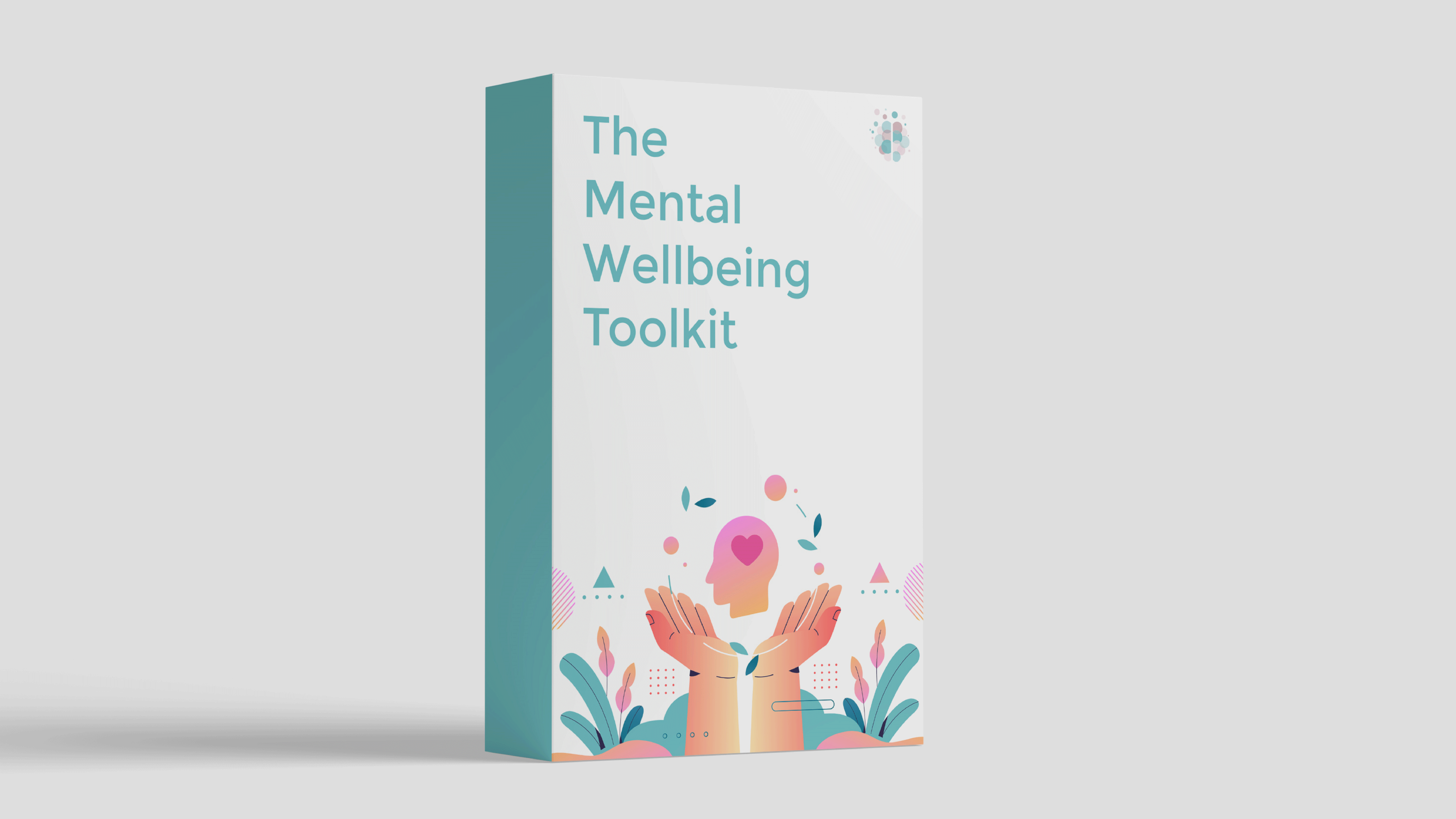
If you’re interested in applying the science of sustainable behaviour change, be sure to check out The Lasting Habits System inside The Mental Wellbeing Toolkit.
By combining insights from psychology, neuroscience, and evolutionary science, this system helps you:
- Transform new year’s resolutions or personal goals into consistent habits
- Use reflection to keep momentum alive
- Turn lapses into learning opportunities rather than setbacks



About Rebecca
Rebecca Marks is the founder of The Wellness Society, a social enterprise that has supported thousands on their journey to mental wellbeing.
Her tools have been shared by the NHS and featured by Mind, the UK’s leading mental health charity. She comes from a career in mental health charity management, facilitating peer support programs and co-producing initiatives with service users.
Learn more about our story on the About page.