
Anger is one of the most visible, recognisable emotions we experience. But most of the time, anger is telling only part of the story.
Beneath the surface, a much more complex emotional landscape is often at work. And as we’ll explore, understanding what's really going on can change everything.
What Is the Anger Iceberg?
The anger iceberg is a metaphor often used in therapy settings to illustrate that anger is rarely the root emotion.
Like an iceberg, what we see above the surface – the outburst, irritability, harsh words – represents only a fraction of what's actually happening beneath.
Sara Macke, a licensed clinical social worker, puts it this way: “I describe anger as a bodyguard in front of a club door – there's a lot going on behind, but all people can see in front of them is a big scary intimidating protector.”
The emotions underneath are harder to sit with and express. So anger steps in instead, offering a quick hit of energy and a temporary sense of control.
Why Anger Is Considered a Secondary Emotion
Therefore, psychologists often describe anger as a secondary emotion, meaning it tends to surface in response to a primary emotion that feels more threatening.
Fear and sadness, for example, require us to acknowledge pain. Anger, on the other hand, can feel more actionable, creating distance from the uncomfortable feelings underneath.
Macke describes how she approaches this with clients: “We address how behaviours are just the top of what people can see – they do not understand what is going on beneath the surface. And phew, beneath the surface can hold a lot of weight.”
Her approach is direct: “I tell my clients that if you are angry, you are experiencing other emotions. There are no circumstances where you are just angry – it is a fact.”
What the Iceberg Looks Like in Practice
Therapists use the anger iceberg as a visual tool to help clients make sense of their emotional responses in real time.
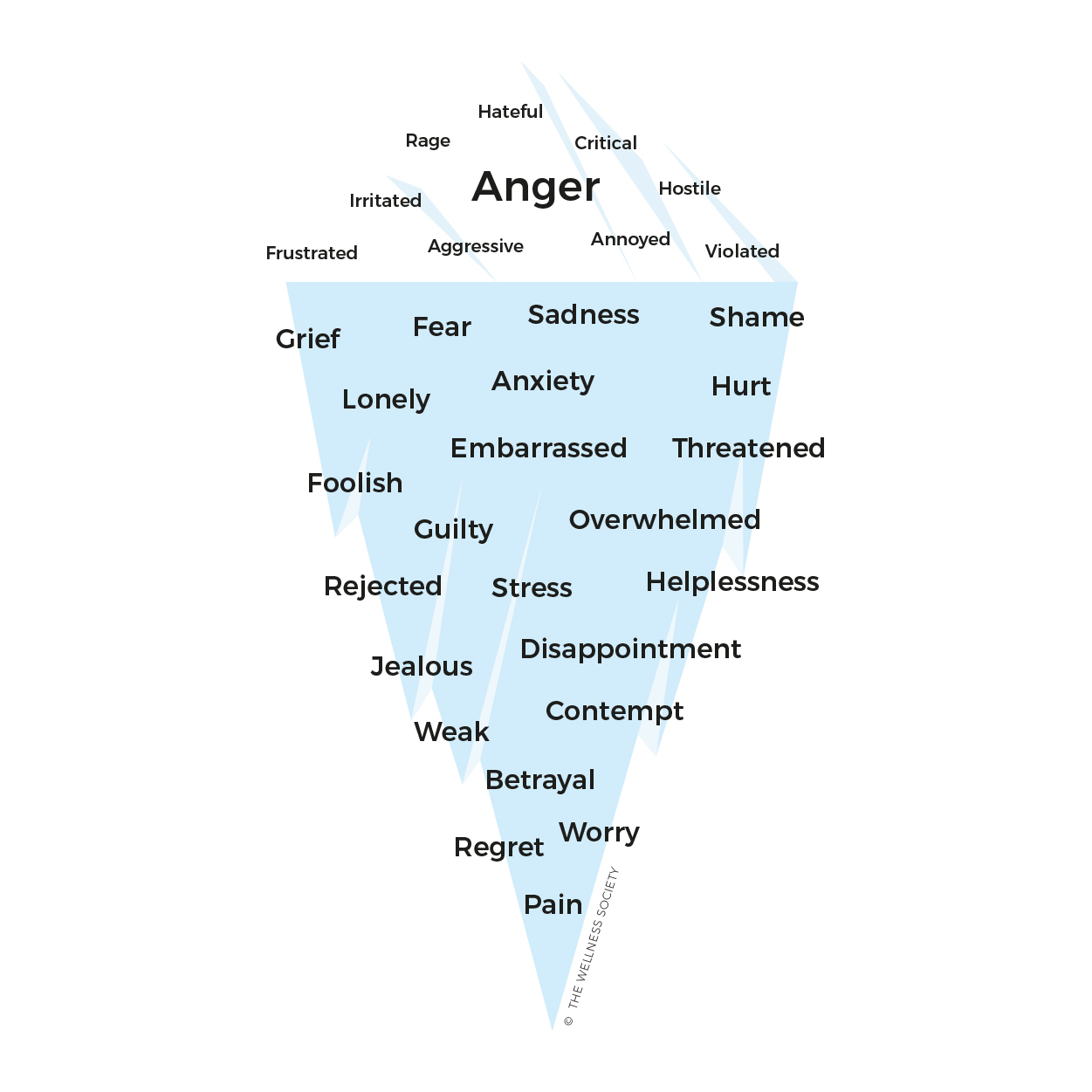
Raffi Bilek, a licensed clinical social worker, explains the appeal: “The anger iceberg is a useful tool because it helps people get a visual sense of something that's going on internally. Just showing them the image and talking about what's beneath the surface helps people connect with the ideas.”
It works across age groups, too. Dr. Ben Garrett, a counsellor, shares: “Whether I'm working with children, teens, couples, or adults, I often find that when people become curious about what is beneath their anger rather than fighting it, the entire therapeutic process begins to move forward.”
When you shift from defending your anger to exploring it, something opens up.
Alicia Henry, a psychotherapist, reflects on her clinical experience: “I have never had a client who was unable to identify at least one underlying emotion connected to their anger. Once those deeper feelings are recognized, we can begin to explore the larger emotional story beneath the surface.”
How do you know if the anger iceberg applies to your anger?
Bilek points to frequency as an important indicator.
Occasional anger is normal, even healthy. Persistent anger is worth paying closer attention to: “If it seems to be there all the time, and it's a response to many provocations day after day, that's a good indication that something's going on beneath the iceberg.”
He compares it to headaches – a single one is unremarkable, but a daily one suggests something more needs attention.
Which Emotions Are Beneath Anger?
While every person's emotional landscape is different, certain emotions tend to show up repeatedly beneath the surface of anger.
Shame
Shame is one of the most commonly uncovered emotions, and one of the most difficult to acknowledge.
Dr. Garrett recalls working with a client whose explosive anger in the workplace masked something more vulnerable: “After several sessions he realized what he was actually feeling was shame and fear of failure – much harder emotions to identify with.”
Alison Bekendam, a registered social worker, describes a similar pattern: “I worked with a client who initially presented with intense anger toward their former spouse. As therapy progressed, they recognized that beneath the anger was actually shame.”
Bekendam adds, “It felt much easier to be angry at their ex-wife than to acknowledge the deep shame they felt over the marriage ending. Once we could acknowledge the shame, the therapeutic work shifted from managing anger to building greater self-compassion.”
Eventually, the client was able to recognise the ways the marriage had been unhealthy and acknowledge the reasons why their ex-wife had ended the marriage.
Fear
Fear (particularly fear of abandonment or rejection) is another emotion that frequently hides behind anger.
Bilek recalls a client he'll call Jake, who came to therapy because anger was damaging his relationships.
When going through some of the emotions on the bottom part of the anger iceberg, he noticed a shift in Jake’s demeanour: “He sort of froze when we got to 'fear.' That opened the door to a whole new set of feelings that ultimately helped him become aware of a fear of abandonment that was driving much of his unhelpful behaviors at home and at work.”
Grief
Grief is sometimes the last thing a person expects to find beneath their anger. But it shows up more often than most people realise.
Janee Young, a therapist, shares the case of a young adult client who believed he had “anger issues” and regularly argued with family members.
The real driver was something else entirely: “As we explored the client's history during the course of therapy, we realized the root emotion behind all of these behaviors was actually the client's grief surrounding his parents' illnesses.”
Once the grief was addressed directly, his anger diminished significantly.
Other emotions that often lie beneath the surface include:
- Guilt
- Anxiety
- Rejection
- Loneliness
- Disappointment
How to Identify the Emotion Beneath Your Anger
Knowing that hidden emotions exist is one thing – finding them is another.
Therapists use a range of techniques to help clients dig deeper, and several of these can also be practiced independently.
Use Journal Prompts
Journaling gives anger somewhere to go. Writing slows the emotional response down enough to create space for reflection – and that's often where the real insight lives.
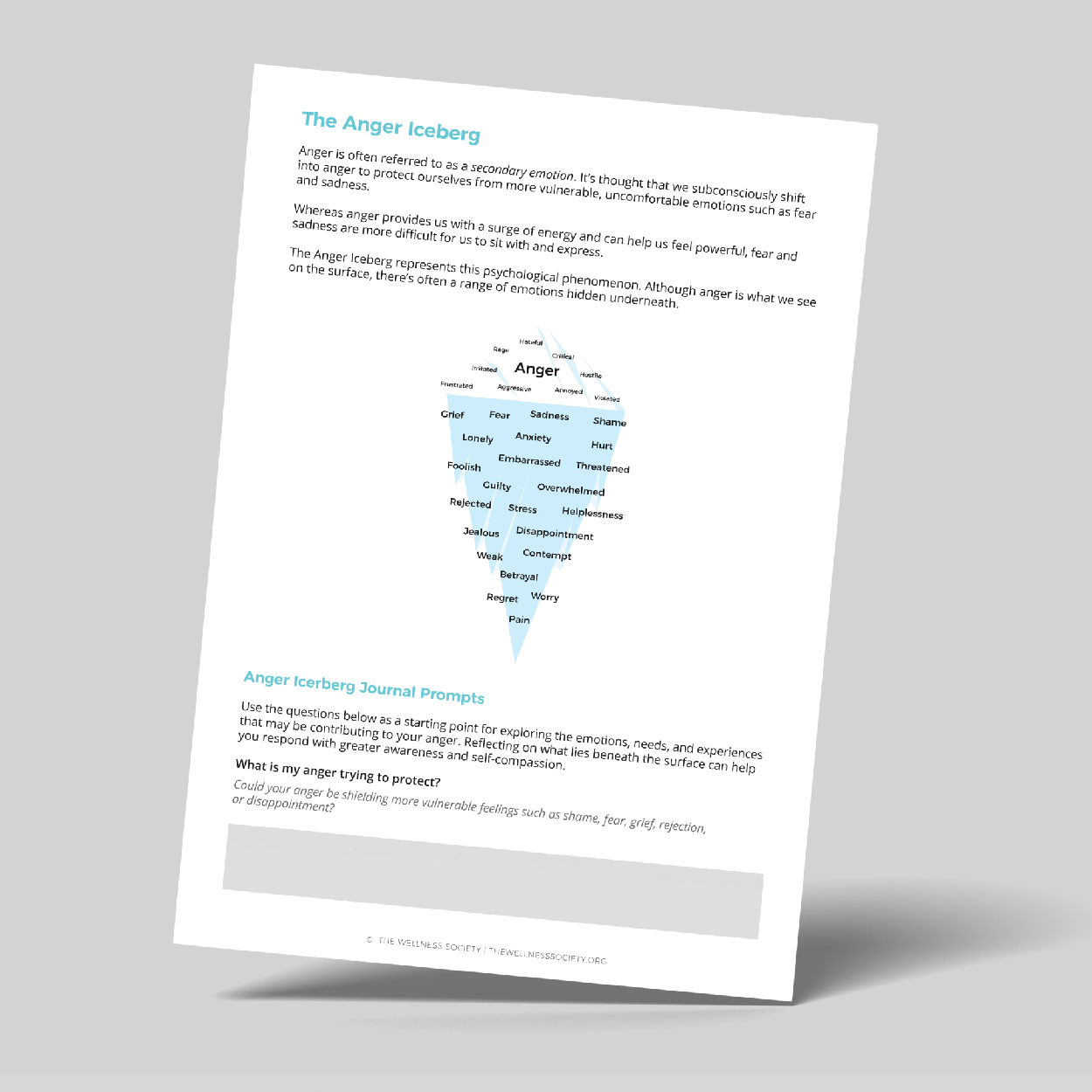
Elena Bahar, a licensed marriage and family therapist, suggests a simple but powerful prompt: “What is this anger trying to protect?”
Rather than judging the anger or trying to push it away, the goal is to get curious about it.
Bahar offers additional prompts: “What is this anger afraid would happen if it stepped back? What does it need me to understand? Is there another feeling here that's harder to acknowledge?”
Young uses a prompt that invites clients to step outside the anger itself: “What emotion would be present if your anger couldn't be expressed at the moment?”
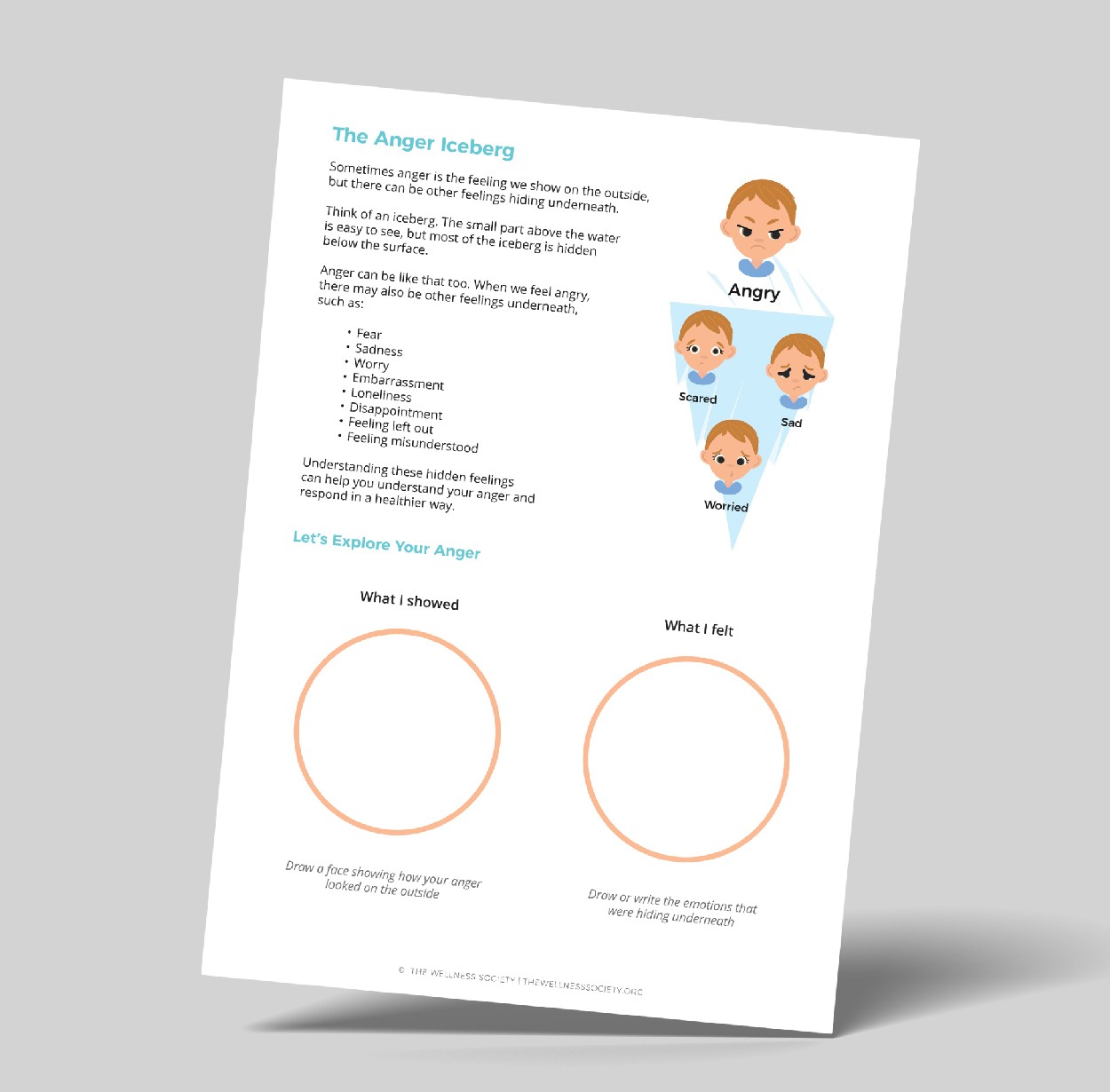
Here are some free Anger Iceberg worksheets with journal prompts to consider:
Use a Feelings Wheel
The Feelings Wheel is a visual tool that maps a broad range of emotions outward from three core states – sad, mad, and scared.
It can help when you're struggling to name what you're actually feeling beyond “angry.”

Feelings Wheel worksheets are included in The Mental Wellbeing Toolkit
Connecting Feelings to Needs
As psychologist and founder of Non-Violent Communication (NVC) Marshall Rosenberg puts it: “At the core of all anger is a need that is not being fulfilled.”
When we're angry, something we need – respect, safety, connection – isn't being met.
Learning to identify that need is one of the most practical skills emotional awareness can offer. It moves the focus away from the trigger – what happened, who said what – and toward something more actionable.
These journal prompts can help you make that connection:
- Deep down, what was I hoping for in that situation that I didn't get?
- What does this anger tell me about what I care deeply about?
- What would it look like to meet that need in another way?
Download our free Anger Worksheets for more helpful tips and tools for understanding and managing anger:
Summary
Beneath most anger episodes, there are other feelings waiting to be recognised, such as shame, fear, and grief.
The anger iceberg offers a way to approach these feelings with curiosity rather than judgement.
When you start asking what's underneath your anger rather than fighting the anger itself, the real emotional work begins.
The experts we asked are consistent on this point: identifying the emotions beneath the anger is one of the most important steps toward emotional awareness and healthier relationships.
Why not start with this question next time you notice anger showing up: “What is this anger trying to protect?”
Download Your Free Anger Iceberg Worksheets

About Rebecca
Rebecca Marks is the founder of The Wellness Society, a social enterprise that has supported thousands on their journey to mental wellbeing.
Her tools have been shared by the NHS and featured by Mind, the UK’s leading mental health charity. She comes from a career in mental health charity management, facilitating peer support programs and co-producing initiatives with service users.
Learn more about our story on the About page.