
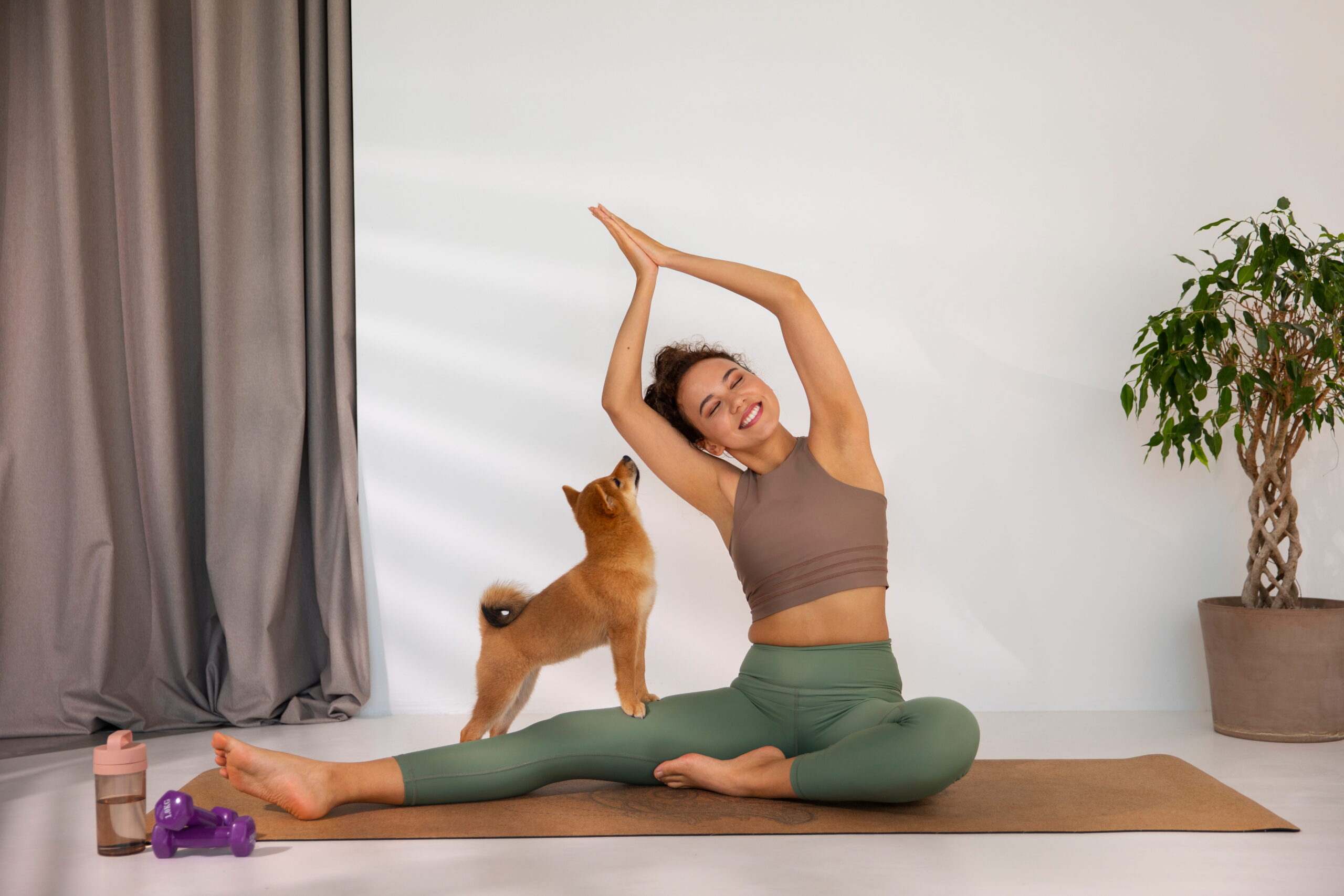
Puppy yoga is a relaxed, playful twist on a traditional yoga class, where participants practise gentle movement alongside free-roaming puppies.
Rather than focusing on precision, the experience is designed to be light, social, and often a little chaotic (in a good way!).
Why is Puppy Yoga So Popular?
Puppy yoga has grown rapidly in popularity, largely due to its feel-good nature and shareable appeal. There are a few key reasons people are drawn to it:
- Stress reduction. Interacting with animals has been shown to lower stress levels and promote relaxation. Combined with yoga, this creates a calming, mood-boosting experience.
- Accessibility. Because sessions are typically beginner-friendly, puppy yoga is approachable even for people who’ve never tried yoga before.
- Novelty and fun. Unlike traditional yoga classes, puppy yoga offers a playful element that makes it feel less serious and more engaging.
What Typically Happens in a Puppy Yoga Class?
In most puppy yoga sessions, puppies are allowed to roam freely around the room while a yoga instructor guides a simple, beginner-friendly class.
Depending on the setup, you might find:
- Puppies wandering between mats, climbing onto participants, or curling up for naps
- Occasional incorporation of puppies into poses (if they’re willing!)
- A short yoga session followed by dedicated playtime/cuddles
It’s worth being realistic about the experience: this is rarely a calm, deeply focused yoga class. There’s usually more laughter, distraction, and interaction than sustained stillness.
Check out this Reddit post for a behind-the-scenes clip!
What Puppy Yoga Isn’t
Most animal-based classes – whether with puppies, goats, kittens, or rabbits – don’t offer the quiet, meditative “Zen” atmosphere often associated with yoga. And it’s definitely not the time to work on advanced postures!
Instead, puppy yoga is:
- Laid-back rather than structured
- Social rather than introspective
- Playful rather than disciplined
The informal nature can actually be a benefit. It creates a welcoming space for beginners and can help people reflect on their expectations of yoga – letting go of perfection and embracing a more flexible, joyful approach.
Instructors often need a sense of humour (and a lot of patience), as sessions can quickly turn into more puppy playtime than yoga practice.
For many participants, that’s exactly the appeal.
Types of Puppy Yoga
There are a few variations of the concept:
- Puppies provided. The most common format, where organisers bring in puppies.
- Adoption-based sessions. Classes run in partnership with animal rescues, often with the goal of helping puppies find homes.
- BYOP (Bring Your Own Puppy/Dog). Participants bring their own well-behaved dogs, usually adult, to a more open, park-style yoga session.
Each type offers a slightly different experience, and not all are equal in terms of ethics.
Is Puppy Yoga Ethical?
This is where things get more complex.
Some people view puppy yoga as a positive way to socialise animals and support adoption. Others raise concerns about animal welfare and the commercialisation of both animals and yoga.
More ethical approaches tend to include:
- Working with legitimate rescue organisations
- Incorporating adoption opportunities
- Keeping fees low or donation-based (e.g. money or supplies for shelters)
- Ensuring animals have rest breaks, space, and choice in interactions
Potential red flags to watch for:
- Classes run in partnership with breeders purely for profit
- Puppies appearing exhausted, overstimulated, or avoidant of human contact
- Overhandling, with no clear boundaries or rest periods for the animals
If the puppies seem overwhelmed or are trying to escape interaction, that’s a sign the environment may not be appropriate for them.
It’s worth noting that some people also feel that combining yoga – a practice with deep cultural and spiritual roots – with entertainment-based animal experiences can be disrespectful to its origins.
Summary
Puppy yoga is less about perfect poses and more about shared moments of joy, distraction, and connection. It can offer a unique, often funny experience that can make yoga feel more accessible and less intimidating. That said, it’s not a replacement for traditional practice. It’s also worth choosing sessions carefully to ensure both people and animals are treated with care.
Free Mental Health and Wellbeing Resources
New to our website? At The Wellness Society, we create practical, integrative mental health and wellbeing tools.
Explore our Free Tools Library to access a wide variety of resources today.


About Rebecca
Rebecca Marks is the founder of The Wellness Society, a social enterprise that has supported thousands on their journey to mental wellbeing.
Her tools have been shared by the NHS and featured by Mind, the UK’s leading mental health charity. She comes from a career in mental health charity management, facilitating peer support programs and co-producing initiatives with service users.
Learn more about our story on the About page.