
Is the job that once lit you up now leaving you feeling flat?
Perhaps your energy is draining, your patience thinning, and the work version of you is starting to feel increasingly out of sync with the person you’re becoming.
If this sounds like you, you might be experiencing what’s commonly referred to as “soul burnout”. This is an informal, emerging term used in depth and spiritual psychology. It describes burnout that isn’t primarily about workload or stress, but about a values and identity mismatch.
Similar terms are:
- Values incongruence (ACT, organisational psychology)
- Existential burnout
- Identity dissonance
This state can show up quietly at first, then loudly when you ignore it. Keep reading to learn more about the signs of soul burnout, why it occurs, and how to address it.
The Signs of Soul Burnout
- A growing sense of inner conflict. Part of you continues to perform, while another part feels increasingly misaligned. You might feel like you’re living a life that no longer fits who you’re becoming.
- Persistent emptiness rather than overwhelm. You may not feel overstressed – just flat. Tasks that once felt meaningful now feel hollow, even when they’re manageable.
- Loss of motivation without a clear cause. You know what to do. You’re capable of doing it. But something inside resists.
- Success no longer feels satisfying. Praise, promotions, or milestones fail to provide the sense of fulfilment they once did.
- Fatigue that rest doesn’t resolve. Time off helps temporarily, but the heaviness returns as soon as you re-enter the role or routine.
- Cynicism or emotional detachment. You may notice a subtle hardening (caring less, disengaging emotionally, or going through the motions without genuine presence).
- A quiet but persistent longing for “something else”. There might not be a clear alternative in mind, just a sense that this is no longer it. The question beneath the surface is often: What am I actually doing this for now?
Why Does Soul Burnout Happen?
Soul burnout tends to arise when inner growth outpaces outer life.
As people evolve emotionally, psychologically, or spiritually, their values and sense of meaning naturally shift. When work, roles, or identities remain organised around an earlier version of the self, a quiet but persistent tension develops. Over time, living in ways that no longer reflect who you are becoming begins to feel draining, even if nothing is “wrong” on the surface.
Emma is successful by most external measures. She has a stable, well-paid role as a marketing manager, is well-regarded at work, and meets her targets with ease. Earlier in her career, the recognition energised her. But over time, her priorities shifted. After a period of personal growth, she began valuing depth, creativity, and contribution over status.
Nothing in her job objectively worsened, yet her motivation steadily declined. She felt inexplicably tired, disengaged, flat – especially at the start of the workweek. Time off helped only briefly. What she was experiencing wasn’t burnout from overwork, but from continuing to organise her life around an identity that no longer reflected who she’d become.
Erosion of inner alignment slowly depleted Emma’s energy, not because the work was too hard, but because it no longer felt meaningful.
Early life and career stages are often shaped by external cues about who to be and what to pursue. As people mature, motivation increasingly comes from within, guided by authenticity, integrity, and purpose.
When life remains structured around external expectations while the inner compass has shifted, motivation naturally collapses.
Another contributing factor is chronic self-suppression. Roles that require emotional masking, value compromise, or silencing intuition demand ongoing psychological effort. Over time, the psyche responds by withdrawing energy as a form of self-protection. Rest alone doesn’t resolve this, because the exhaustion is not physical but existential.
Cultural conditioning plays a role too. Many people are taught to prioritise productivity, stability, and responsibility over inner truth. When discomfort arises, it’s often interpreted as weakness rather than information. Fear (of change, loss, uncertainty, disappointing others) can keep people locked into misaligned roles long after their inner world has moved on.
How to Address Soul Burnout
Self-care is an important foundation. If your work consistently crowds out rest, consider looking after yourself as a non-negotiable. Design your schedule around it, not after it. That might mean fewer meetings, clearer priorities, or a firmer end time. Your future energy depends on today’s design.
Beyond self-care, addressing soul burnout involves gently but honestly examining alignment. One practical way to begin this process is through values reflection. Values worksheets can help you clarify which values energise you and which ones are being compromised. You may be interested in our free Values Workbook via our Free Tools Library.
This kind of self-reflection isn’t about making immediate, dramatic changes, but about restoring a sense of inner direction. When values become clearer, decisions tend to feel less forced, and alignment can begin through small, meaningful changes.
Values-led adjustments can then begin to restore energy. This might involve renegotiating responsibilities, creating space for more meaningful tasks, or allowing parts of your identity that have been sidelined to re-enter your working life.
Even modest shifts (a different focus, a new boundary, a creative outlet) can reduce the inner friction that fuels soul burnout.
Exploring spirituality can be helpful, particularly when soul burnout is rooted in questions of meaning and identity.
When values shift, people often find themselves asking deeper questions:
Who am I, really?
What matters now?
What makes a life feel worth living to me?
Spiritual exploration offers a language and framework for engaging with these questions.
Importantly, this doesn’t require religious belief. Practices such as journaling, meditation, and exploring spiritual perspectives can be particularly helpful.
Spiritual exploration can also soften the urgency to “figure everything out” straight away. It encourages trust in gradual unfolding, helping you tolerate uncertainty.
An Example
Emma began by stabilising her energy.
She set firmer boundaries around her working hours, declined non-essential meetings, and protected time for rest and reflection. These adjustments created enough space for her nervous system to begin to settle.
Eventually, Emma began a period of values reflection. She noticed that creativity and contribution consistently energised her, while surface-level metrics left her feeling depleted.
Instead of quitting her role, Emma looked for small ways to reintroduce alignment. She volunteered to lead a longer-term campaign that allowed for more creative strategy. She negotiated fewer reactive tasks in favour of work that required deeper thinking. Outside of work, she returned to a neglected creative practice that gave her a sense of meaning beyond performance.
Emma also began journaling regularly, using it as a space to explore questions about identity and purpose. This helped her tolerate uncertainty and softened the pressure to “work it all out.”
Over time, these small, values-led shifts reduced the inner friction she’d been living with, and her energy gradually returned. The work version of Emma started to feel less separate from the person she was becoming.
Summary
Soul burnout isn’t a failure of resilience, motivation, or coping skills.
It’s often a sign that your inner world has evolved while your outer life has remained organised around an earlier version of you.
When work no longer reflects your values, identity, or sense of meaning, energy gradually drains. Rest alone rarely resolves this, because the exhaustion is existential rather than physical.
Addressing soul burnout begins with awareness. Understanding what’s going on, and practising self-care to protect your energy and nervous system. Clarifying values, making small alignment-based adjustments, and allowing space for reflection can gradually restore your sense of vitality.
Listen to what your exhaustion is communicating, and allow your life to evolve in step with who you’re becoming. You’ve got this!
Helpful Tools
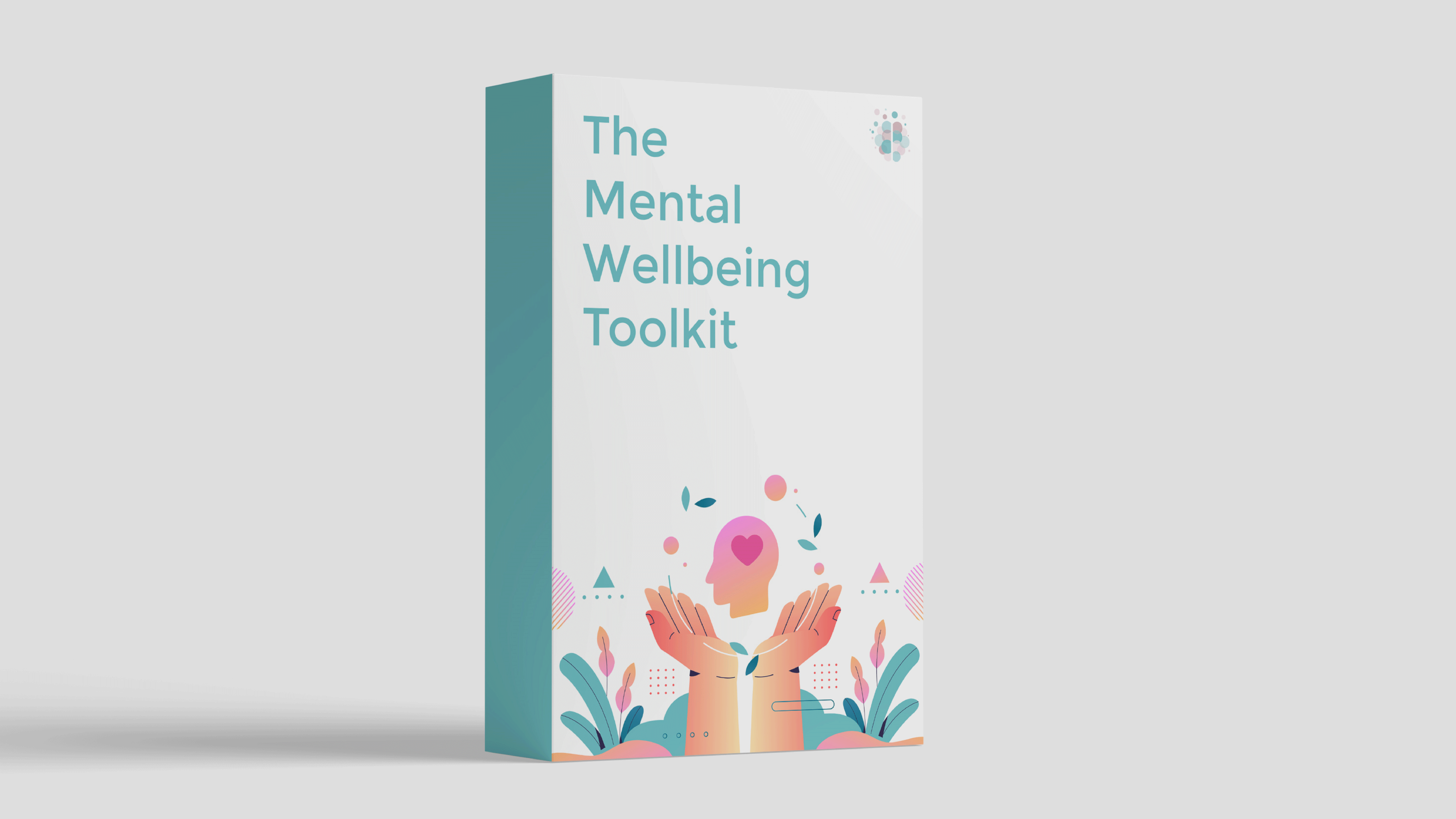
Our self-guided program includes tools from CBT, DBT, ACT and more, so you can discover what works best for you. Check out The Mental Wellbeing Toolkit today – it's "like 10 therapy sessions in one."



About Rebecca
Rebecca Marks is the founder of The Wellness Society, a social enterprise that has supported thousands on their journey to mental wellbeing.
Her tools have been shared by the NHS and featured by Mind, the UK’s leading mental health charity. She comes from a career in mental health charity management, facilitating peer support programs and co-producing initiatives with service users.
Learn more about our story on the About page.