Surveys across the US, UK, and elsewhere show a clear trend: many people (especially younger generations) are increasingly identifying as spiritual but not religious (SBNR).
At the same time, it’s a common critique that mainstream therapeutic approaches don’t always go deep enough. They often struggle to address the deeper human needs that clients bring into the room:
- The need to feel connected to something greater
- The need for meaning and purpose
- The need to make sense of suffering
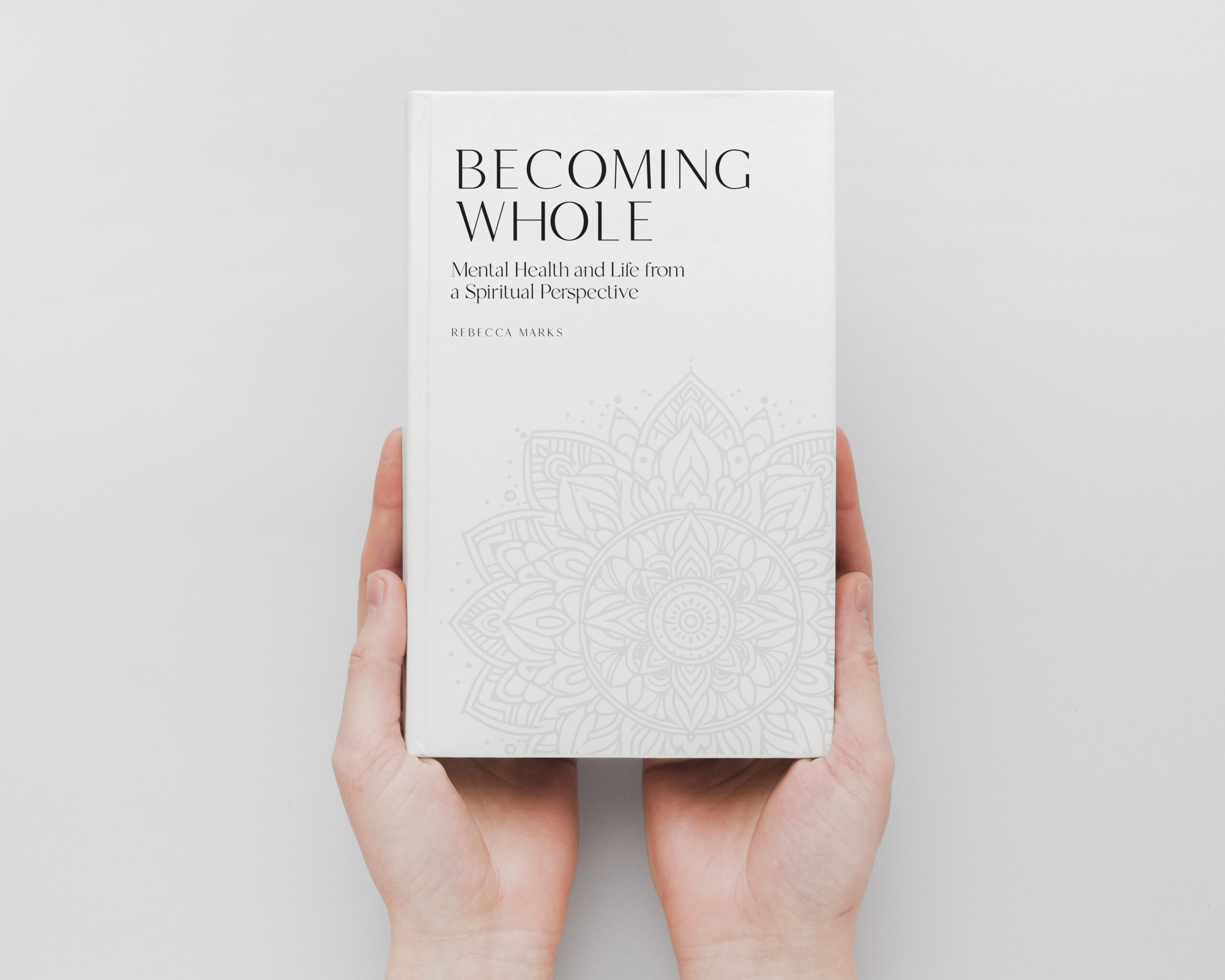
Becoming Whole was created to bridge that gap.
In this tool, spirituality is approached as:
- A universal drive for a connection to something greater than ourselves
- A values-based framework oriented toward higher qualities (e.g., love, compassion, wisdom)
The resource provides accessible overviews of multiple spiritual frameworks and shared philosophical principles. This broad, non-prescriptive landscape allows clients to draw from traditions that resonate most.
Ideal Client Profile
Becoming Whole may be especially relevant to clients who:
- identify as spiritual but not religious
- are interested in mindfulness and meditation
- engage in journaling
- respond well to ACT’s focus on values-based living
- experience existential anxiety
- feel emotionally numb, disconnected, or directionless
- are searching for meaning after trauma, loss, or transition
Associated Modalities
Becoming Whole aligns well with numerous modalities such as:
Transpersonal Psychology
It invites a grounded exploration of spirituality, consciousness, and expanded awareness, equipping practitioners with an approachable doorway into transpersonal themes.
Mindfulness-Based Approaches (MBCT, MBSR)
It deepens understanding of non-judgemental observation while providing metaphysical context for mindfulness.
Included are a set of contemplative guided meditations:
- Accessing the Higher Self. Explores the nature of the higher self – the part of us that responds rather than reacts; the part of us that aligns with values such as compassion, love, and creativity. It emphasises pausing, stepping back from fear-based reactions, and accessing steadiness, wisdom, and authentic presence.
- Ego to Awareness. Guides the listener to notice the space between observer and thought, revealing the steadier presence beneath mental chatter. Available in both long and short formats.
- Leaning into Trust. Inspired by spiritual principles, this meditation reframes life's uncertainties as a ride to be met with openness. It emphasises consciously leaning into trust, aligning with a sense of being supported and guided by a larger intelligence.
Acceptance and Commitment Therapy (ACT)
Becoming Whole focuses on values-based living and acceptance of internal experiences.
Humanistic Therapy
It affirms core principles such as self-actualisation, inner wisdom, and growth orientation.
Existential Therapy
It promotes exploration of meaning, purpose, and identity. It supports existential inquiry with prompts along the lines of:
- What do I truly value?
- What kind of person do I want to become?
- What’s my life asking of me right now?
Narrative Therapy
It uses the hero’s journey to help clients reframe struggle as part of a meaningful arc.
Internal Family Systems (IFS)
The distinction between the ego and higher self deeply resonates with IFS’s concept of Self. It offers clients an intuitive way to understand the difference between reactive patterns and their deeper, wiser awareness.
Jungian and Depth Psychology
It connects to shadow work, synchronicity, and symbolic meaning-making.
Coaching Approaches
It emphasises values alignment, identity exploration, and long-term personal development planning.
How to Integrate The Tool into Your Work
Below are the key ways helping professionals can integrate Becoming Whole into their work.
1. Start by Getting Informed Consent
Assess Interest
Begin with a gentle exploration of the client’s spiritual or religious history.
“Have spiritual ideas ever been important to you?”
Never assume openness or aversion. Let the client lead.
Present the Resource as an Optional Tool
“I came across a resource that looks at mental health and life through a spiritual perspective. It might complement the work we’re doing. Would you like to look at the first chapter and see if it might be something worth exploring?”
Emphasise Autonomy
Spiritual exploration must never feel obligatory. Use phrases such as:
- “It’s completely optional.”
- “You decide which sections and prompts, if any, are meaningful for you.”
- “We can move on from this at any time – just let me know.”
2. Use The Self-Reflection Exercises
Becoming Whole contains numerous self-reflection prompts which helping professionals can use in several ways:
Between Sessions
Assign a single prompt or section to prevent overwhelm.
Prompts often work well because they:
- Encourage increased self-awareness
- Create “Aha” moments clients bring into sessions
- Help clients articulate their core values, identity, and worldview

Illustrative Therapy Case Study Example
Claire is 67, newly retired, and struggling with identity loss and questions of purpose. She reviews the introduction of Becoming Whole and requests the full copy.
Homework Assigned
You ask Claire to continue through the Taoism chapter and complete one of the following prompts:
- In a typical day, where do you feel most aligned with your values? Where do you feel most out of alignment?
- Recall a time you experienced wu wei (effortless action; flow). How might you incorporate more of these states into your life?
Next Session
You might:
- Discuss values-based living in retirement
- Connect wu wei to moments of flow in her past career
- Identify behavioural experiments aligned with ease, creativity, curiosity

Illustrative Coaching Case Study Example
Anna is 37 and recently divorced. She describes feeling emotionally fragile and anxious about the future.
She shares that she felt more spiritual in her younger years and would like to explore spiritual ideas in coaching. You offer her the introduction to Becoming Whole and she requests the full copy.
Homework Assigned
You invite Anna to complete the following prompt on higher qualities: "Choose three qualities from this list that you’d like to strengthen. How might you do this?" You encourage her to choose qualities that feel both meaningful and slightly challenging.
Next Session
Anna shares that she selected: compassion, non-attachment, and play.
You might:
- Explore why these qualities resonated with her and how they relate to her current life themes.
- Discuss moments in her past where she embodied these qualities, helping her recognise existing strengths.
- Support her to identify practical ways she can strengthen them, such as:
- Compassion. “What would it look like to experiment with a more compassionate inner voice this week?”
- Non-attachment. Offer a brief explanation (non-attachment is often misunderstood) followed by a helpful reframe. “Non-attachment is about loosening our grip on a fixed outcome, not about caring less. For example, ‘My life wasn’t supposed to look like this’ can become ‘My life is unfolding in ways I’m still discovering.’”
- Play. “What’s a game or activity you enjoyed in the past and could revisit?”
Anchor the session by having her choose one committed step.
“Considering everything we’ve explored, what's one small experiment that you'd be up for trying before we meet again?”
Further Tips for Reviewing Homework
- Focus on experience and emotions. “What was it like to engage with that question? What feelings came up?”
- Link insights to client goals. “How does what you said about the Buddhist concept of wholesome desire relate to the sense of disconnection we’ve been exploring?”
- Highlight cognitive shifts. “Does this affect how you see that old story about yourself?”
Using Prompts In Session
Prompts can also be ideal for clients who struggle to articulate their internal experiences. They take the pressure off the client to open up spontaneously, offering a doorway into their thoughts, emotions, and values.
“Let’s take a look at this prompt together and see what it brings up for you. You don’t need to have a fully-formed answer – just notice what comes to mind.”
3. Use the Book to Frame Growth as a Journey
Research by Benjamin Rogers and colleagues highlights the power of the hero’s journey framing. Across eight studies, people who viewed their life through this archetype report:
- Greater resilience
- Higher life satisfaction
- Increased meaning
Becoming Whole integrates this arc to help clients reframe:
- Setbacks as part of the path
- Struggles as meaningful
- Growth as inevitable
You might say:
“This section reminds me of the transition you’re facing. What part of the hero’s journey do you think you’re in right now?”
4. Support Deeper Mindfulness Psychoeducation
Becoming Whole explores why mindfulness works psychologically, neurologically, and metaphysically.
Therapists can use these sections to:
- Explain brainwave shifts
- Encourage daily stillness rituals
- Discuss attentional training
Clients often re-engage in mindfulness when they understand more about why it works. As one of our users stated:
“It felt enlightening to have a deeper understanding of the concepts we usually hear when studying mindfulness, spirituality, and religion.”
5. Exploring the Ego and Higher Self
Becoming Whole distinguishes between:
- The ego (protective, survival-oriented)
- The higher self (awareness)
Spiritual clients often find this language emotionally intuitive and less clinical than terms such as “cognitive distortions” or “maladaptive schemas”.
These concepts map naturally onto:
- IFS
- Schema therapy
- Inner child work
You might ask:
- “This section describes the shift from ego to awareness – when have you felt yourself moving into the role of observer?”
- "Does anything in Melissa’s story feel familiar to you?"
- “What do you notice as you read about Leo and Sophia?”
Precautions
Spiritual exploration can be transformative but must be approached thoughtfully.
Avoid Spiritual Bypassing
Watch for:
- Minimising pain (“Suffering comes from attachment. I just need to detach more.”)
- Excusing harmful dynamics (“Everything happens for a reason.”)
- Avoiding grief (“I just need to trust and surrender.”)
- Confusing intuition with fear (“My intuition says I shouldn’t go.”)
Example Scripts If You Notice These Patterns
“Suffering comes from attachment. I just need to detach more.”
“That teaching can offer perspective, and I also notice a part of you that seems to be struggling. What would it be like to let that part speak for a moment, without needing to detach from it right away?”
“Everything happens for a reason.”
“It sounds like you’re trying to make sense of something painful. Finding meaning can be valuable, and at the same time, I’m wondering what impact this situation is having on you. Can we explore the part of you that’s hurting right now?”
“I just need to trust and surrender.”
“Surrender can be powerful, and I also hear a lot of emotion beneath the surface. What might happen if we made some space for the sadness that’s also here?”
“My intuition says I shouldn’t go.”
“Let’s explore this together. Intuition is calm, grounded, spacious. Fear is tense, urgent, protective… Which resonates more with you right now? Both deserve attention, but they have different messages.”
Universal
If you want a single, adaptable line in response to any form of spiritual bypassing:
“I hear your perspective, and I also want to make space for the emotional reality beneath. What’s showing up for you emotionally as we sit with this?”
Exercise Caution With Certain Clients
Avoid spiritual material or proceed carefully with:
- Clients with religious trauma. Spiritual language can trigger abuse memories, shame, and betrayal. It may also re-enact coercive dynamics. Only proceed if client initiates. Use materials to contrast old, imposed beliefs with their own authentic values.
- Clients in acute grief. The search for "meaning" too early can shortcut the essential, painful process of feeling and acknowledging loss. Hold space for pain first. Introduce spiritual exploration only in later, integrative stages of grief.
- Clients experiencing psychosis and mania. Spiritual ideas may fuel delusional systems (e.g., “I am the messiah”).
- Clients with suicidality. Discussions of the afterlife may be misinterpreted as validating a desire to “transition” out of this reality, eroding protective barriers. Focus instead on safety, reasons for living, and distress tolerance. Defer spiritual content until the client is stable and grounded.
Always Maintain an Exit Strategy
Regularly ask:
- “Does this feel helpful or unhelpful right now?”
- “Do you want to continue with this direction?”
- “Feel free to let me know if you ever want to set this aside for the time being.”
For some clients, spirituality will enhance your work together. For others, it won’t. Accept that not everyone will connect with the material, and that’s okay.
Summary
Today’s clients increasingly want an approach that bridges psychology and spirituality.
Becoming Whole was created to address this growing need.
Some ways professionals can use it include:
- Integrating transpersonal themes. Use a grounded, practical tool that enables safe exploration of spirituality and consciousness in a client-led way.
- Deepening mindfulness practice and psychoeducation. Support clients in understanding mindfulness psychologically, neurologically, and metaphysically.
- Exploring values-based living. Help clients clarify what truly matters to them and make choices that reflect their core values.
- Framing growth as a journey. Integrate narrative therapy principles, helping clients reframe their struggles as part of a meaningful, developmental arc.
- Supporting existential enquiry. Invite reflection on meaning, purpose, and life transitions.
Many people desire mental health support that addresses the whole person – mind, body, spirit.
We hope this research-informed tool supports you to integrate spiritual dimensions into your work, offering a structured way to explore meaning and purpose with clients who seek it.