
You’ve stopped seeing the pile of laundry in your bathroom – it’s been sitting there so long. This isn’t laziness. Most people with executive dysfunction actually care deeply about what they need to do. The problem is the gap between wanting to do something and being able to start it.
The brain struggles to engage when a task feels either too big or too vague. Better systems are the way to fix this. Keep reading to discover five techniques for beating executive dysfunction.
1. Decide in Advance With Implementation Intentions
Executive dysfunction often stems from the mental effort required to decide when and how to begin.
Every task comes with dozens of tiny decisions:
- Should I start now or later?
- Which part should I do first?
- How long will it take?
Those decisions create friction, making it easier for the brain to postpone action.
This is where implementation intentions come in. Developed by psychologist Peter Gollwitzer, the strategy involves creating a simple "if-then" plan (or "when-then" plan) before the moment of action arrives. Instead of relying on motivation, you connect a specific cue with a predetermined behaviour.
For example:
- When I finish making my morning coffee, I'll reply to one email.
- If I sit down at my desk, I'll spend five minutes reviewing my to-do list.
- When I brush my teeth at night, I'll lay out tomorrow's clothes.
By making the decision ahead of time, you're removing the need to negotiate with yourself in the moment. Your brain no longer has to ask, "Should I start now?" because the answer has already been made.
2. The First Step Must be Small
One of the biggest reasons executive dysfunction makes it so difficult to begin is that your brain doesn't see a task as a series of manageable steps – it sees the entire mountain all at once.
"Clean the house," "write the report," or "study for the exam" are all large, undefined goals. Without a clear starting point, your brain interprets the uncertainty as mentally demanding, making avoidance feel like the easier (and safer) option.
Shrink the goal to the smallest of tasks:
- Open the presentation file.
- Pick up one item from the garage floor.
- Read the first paragraph of the assignment.
These actions may seem almost too small to matter, but that's exactly the point. They bypass the mental barrier that keeps you stuck.
Psychologists call this reducing activation energy – the amount of effort required to begin a task. The higher the activation energy, the more likely you are to procrastinate
3. Borrow Structure From Someone (or Something) Else
Don’t wait for the feeling of motivation.
What actually moves things forward is usually external. A person who checks in. A self-improvement app that doesn't care how you're feeling. The less you have to decide in the moment, the less room there is for avoidance to creep back in.
When your own momentum stalls, something outside you has to hold the structure in place.
Even a low-tech version of this: a shared doc, a recurring alarm, someone who just asks "did you do the thing" can carry you through the stretches where you can't quite carry yourself.
Modern advances in AI tools may be particularly useful for people who struggle to get started. Unlike asking another person, there's no concern about interrupting someone, feeling embarrassed by a basic question, or worrying that you've already asked the same thing before.
If you're stuck, you can ask an AI to help break a task into smaller steps, generate a starting point, or organize your thoughts. While it's not a replacement for human support, many find it to be a low-friction way to reduce the mental effort of getting started.
4. Try Working With Someone Nearby
If you've ever found that you can focus in a busy café, library, or shared office but struggle to do the same at home, you're not imagining it. This phenomenon is often referred to as body doubling.
Despite the unusual name, the concept is simple: having another person nearby while you work can make it easier to begin and stay engaged with a task. The other person doesn't have to help, supervise, or even interact with you.
Researchers don't fully understand why body doubling works, but several factors may contribute.
Being around other people can increase your awareness of what you're doing, make distractions less appealing, and create a subtle sense of shared purpose. For people with executive dysfunction, this external structure can compensate for the difficulty of generating that structure internally.
You might:
- Work at a café or library where other people are quietly focused.
- Study alongside a friend, even if you're working on different things.
- Join a virtual co-working session where participants simply work silently together.
If starting tasks alone feels consistently difficult, working in the presence of someone else may be enough to help you take that first step.
5. Try Out Apps with Gamification
People with executive dysfunction often find it difficult to stay motivated by rewards that are far in the future.
Gamification can help by creating immediate feedback through points, streaks, or progress bars. These frequent signals provide short-term incentives, which can be more motivating than an abstract future payoff.
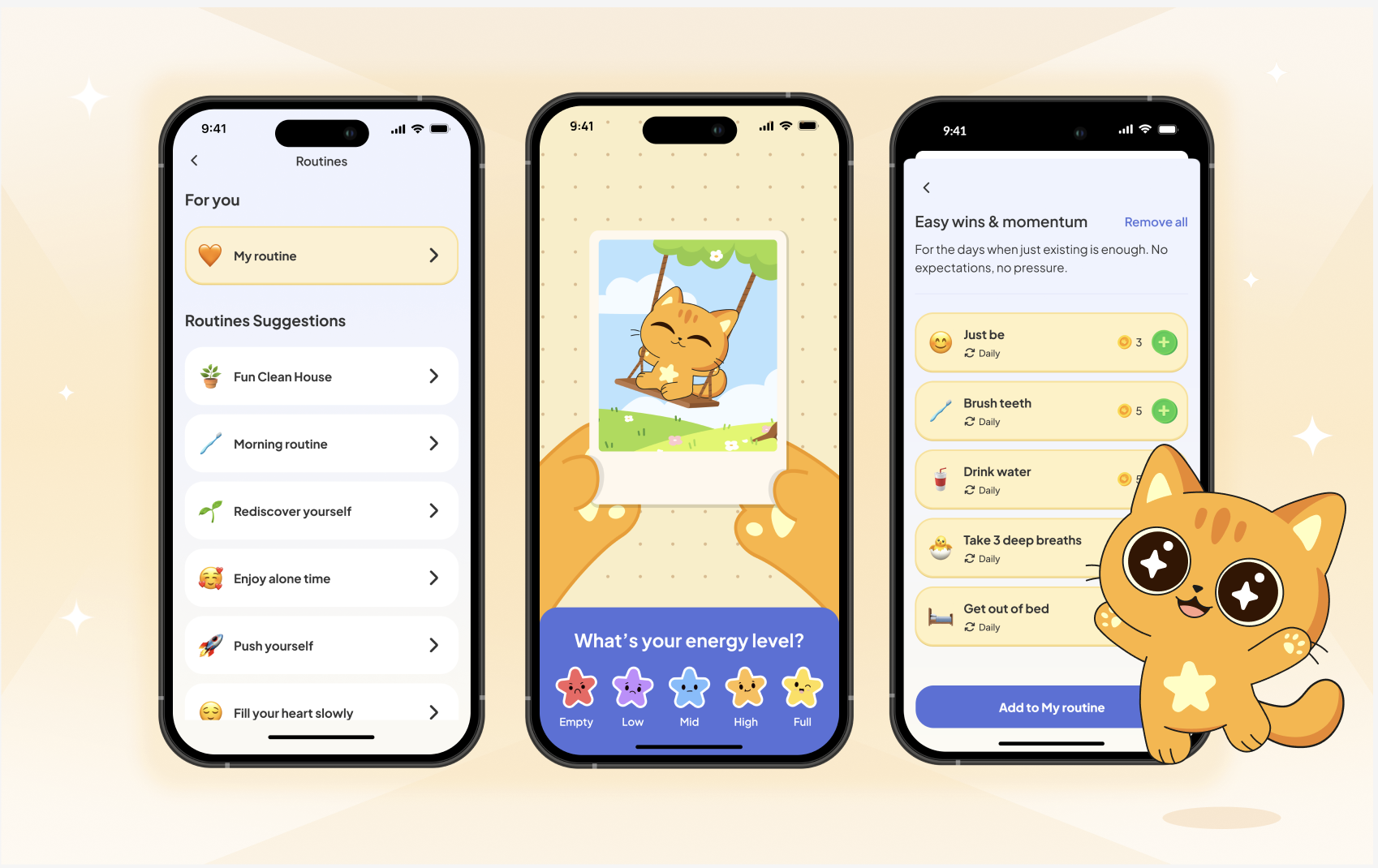
For example, the Chillio life planner app uses a gamification approach. It’s a life organizer with an AI cat companion named Chi (typical of cozy apps). Complete a task, earn rewards, and use them to upgrade Chi's room. By combining a daily routine planner with the calming aesthetics, it transforms habit-building into a rewarding game.
Summary
Executive dysfunction isn't laziness – it’s the difficulty of turning intentions into action. When tasks feel too large or vague, the brain often avoids them altogether. Instead of relying on willpower, the most effective strategies reduce the friction involved in getting started:
- Make decisions in advance. Use implementation intentions ("if-then" plans) to link a specific cue to a specific action, reducing the need to decide when or how to begin.
- Start with the smallest possible step. Break large tasks into actions that take only a minute or two, lowering the mental effort required to get started.
- Borrow external structure. Use reminders, planning tools, or AI assistants to reduce the number of decisions you have to make in the moment.
- Work alongside other people. Body doubling can make it easier to begin by providing subtle accountability and structure.
- Create quick rewards. Gamified productivity apps that use points, streaks, or progress tracking provide short-term feedback that can make tasks feel more engaging.
The common theme across all techniques is simple: don't expect motivation to appear first. Instead, design your environment and routines to make starting a task easier. Small changes that reduce decision-making, increase structure, and provide immediate feedback can make a meaningful difference in overcoming executive dysfunction.
Free Mental Health and Wellbeing Resources
New to our website? At The Wellness Society, we create practical, integrative mental health and wellbeing tools.
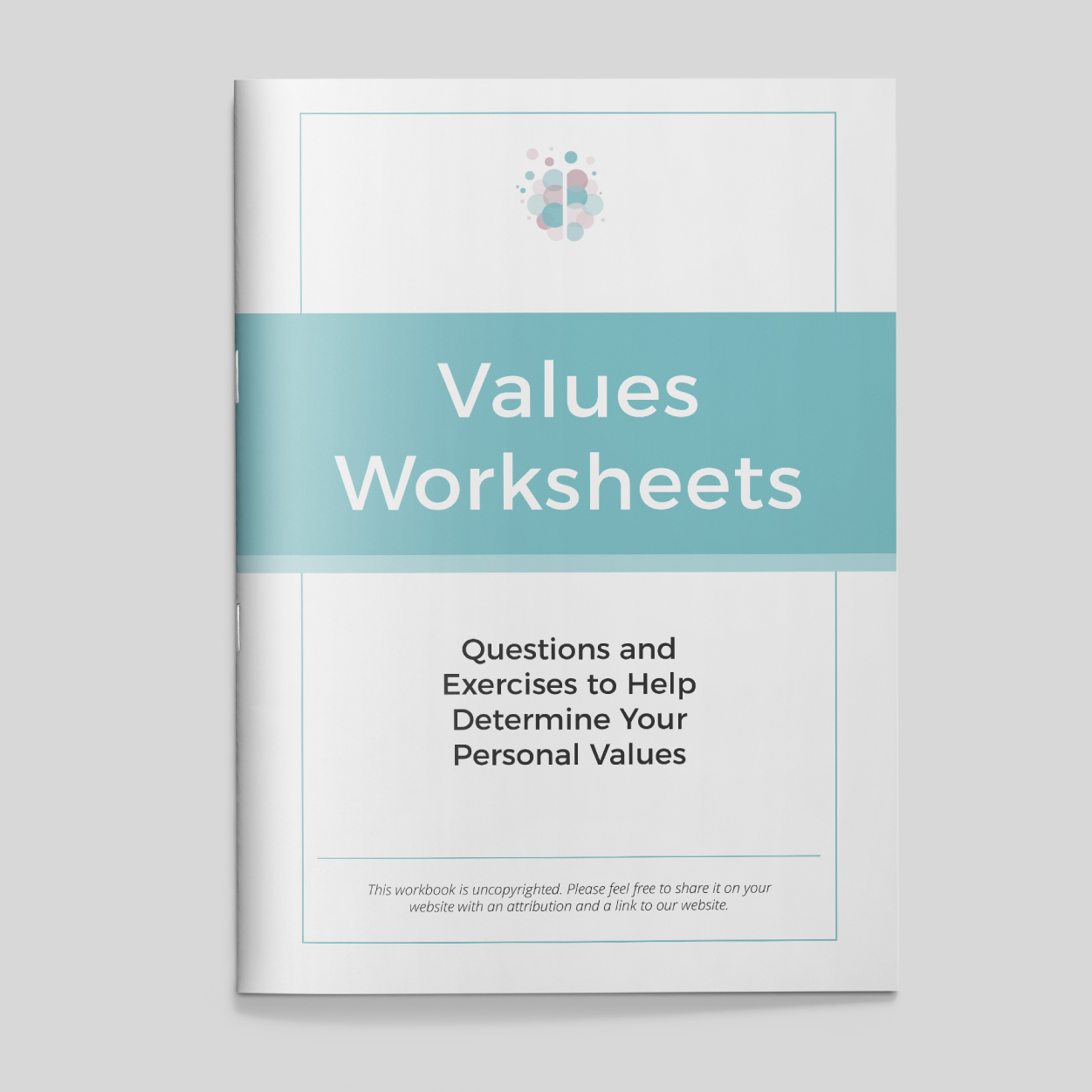
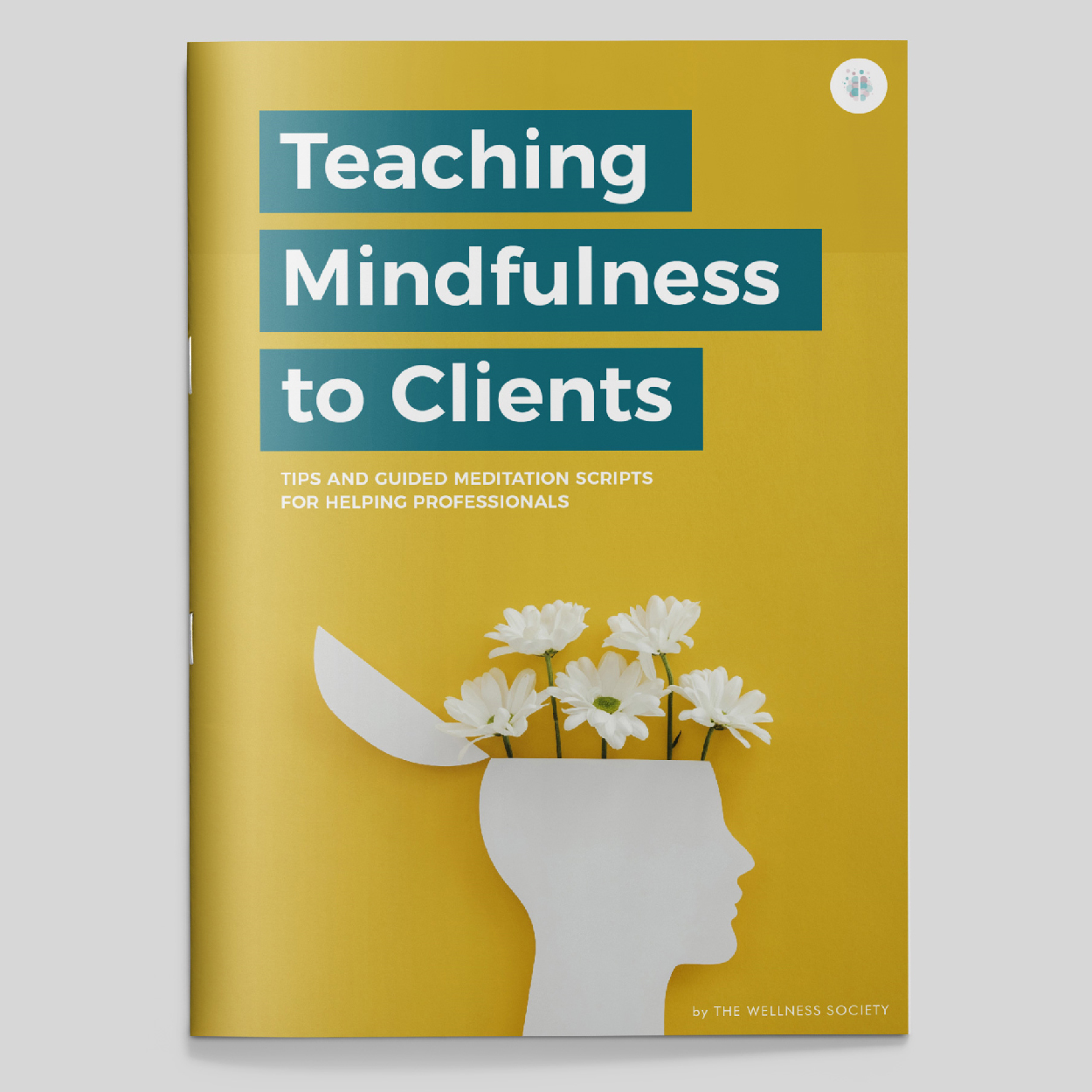
Explore our Free Tools Library to access a wide variety of resources today.


About Rebecca
Rebecca Marks is the founder of The Wellness Society, a social enterprise that has supported thousands on their journey to mental wellbeing.
Her tools have been shared by the NHS and featured by Mind, the UK’s leading mental health charity. She comes from a career in mental health charity management, facilitating peer support programs and co-producing initiatives with service users.
Learn more about our story on the About page.