
We believe meaningful change starts with understanding yourself.
That’s why we’ve created our Toolkit around practical, compassionate, trauma-informed exercises that can help you recognise your patterns, understand your emotions, and build healthier ways of responding.
If you experience anxious attachment, relationships can sometimes feel like an emotional rollercoaster. A small change in communication can leave you wondering where you stand, while moments of distance can trigger a strong need to reconnect.
The good news is that these patterns can change.
Here are five ways the Toolkit can support you as you work toward a more secure relationship with yourself and others.
1. It Helps You Understand What’s Happening Inside You
Perhaps your partner takes longer than usual to reply. You notice the change immediately, your thoughts start racing, and before you know it, you’re wondering whether something is wrong.
The Toolkit gives you practical ways to slow this process down.
You’ll find exercises such as:
- The thinking slow method
- Emotion and mood tracking
- Feelings identification tools
- Guided journaling
- Reflective exercises
These activities help you put words to your internal experience. Learning to identify those layers can change how you respond. When you understand your thoughts and emotional patterns, you have more choice over what happens next.
That awareness is an important part of developing secure attachment.
2. It Helps You Cope With Relationship Anxiety
For someone with anxious attachment, uncertainty can feel extremely uncomfortable.
You might find yourself checking your phone, replaying a conversation, looking for changes in your partner’s behaviour, or imagining what could go wrong.
Your mind is trying to find certainty.
The difficulty is that relationships rarely provide complete certainty. Even in healthy relationships, people have busy days, misunderstand each other, need space, and communicate differently from time to time.
When anxiety takes over, you may automatically reach for behaviours that temporarily make you feel safer.
This might look like:
- Repeatedly asking for reassurance. You need to hear that your partner still cares, but once the reassurance wears off, the worry can return.
- Reading into small changes. A different tone can become evidence that the relationship is in trouble, even when there may be another explanation.
- Trying to restore closeness immediately. When you sense distance, you may send more messages, seek contact, become upset, or start a difficult conversation because reconnecting feels urgent.
These reactions are often attempts to reduce emotional distress and restore a sense of connection.
The Toolkit gives you practical strategies for managing that distress without immediately acting on it.
You can learn to:
- Calm anxious thoughts
- Tolerate uncertainty
- Recognise emotional triggers
- Work through intense emotional responses
The aim is to give yourself enough emotional space to decide what you actually need before responding. With practice, a moment of uncertainty doesn’t have to become a relationship emergency.
3. It Helps You Become More Supportive Toward Yourself
Anxious attachment can come with a very critical inner voice.
You might wonder why you’re “so needy,” feel embarrassed about wanting reassurance, or tell yourself that your reactions are unreasonable. This kind of self-judgment can make anxiety even stronger.
The Toolkit includes content and exercises designed to help you develop a more understanding relationship with yourself.
You can practise recognising your needs, responding to self-critical thoughts, and expressing what you feel in a clear and constructive way. You can acknowledge that you’re scared without deciding that your fear means your relationship is unsafe.
You can recognise that you need reassurance while also learning ways to soothe yourself.
Your emotions are information. Learning to listen to them can help you understand what’s underneath the anxiety.
4. It Helps You Strengthen Your Sense of Self
When attachment anxiety is strong, it’s easy for a relationship to take up a huge amount of mental energy.
You might organise your day around another person, put your own priorities aside, or spend so much energy thinking about the relationship that you lose touch with yourself.
Building security involves strengthening your relationship with yourself, too.
The Toolkit includes tools for exploring:
- Your personal values
- Your goals
- Your everyday habits
These exercises can help you reconnect with the parts of your life that exist beyond romantic relationships.
That could mean pursuing something you care about, returning to an old interest, or setting goals that are entirely your own.
The stronger your sense of self becomes, the less you have to rely on a relationship to tell you that you’re okay.
You can care deeply about someone while still having a life that belongs to you.
5. It Turns New Insights Into Everyday Practice
Understanding your attachment pattern is a useful starting point.
Real change comes from practising different responses when your familiar triggers show up. That’s why the Toolkit focuses on creating habits you can actually maintain.
You can use it to set goals, monitor your progress, reflect on difficult moments, and recognise the changes you’re making over time.
Imagine noticing the urge to send another reassurance-seeking message and giving yourself ten minutes to regulate first.
Imagine feeling anxious about a change in communication and being able to reliably calm yourself down by internalising the fact that you don’t have all the information yet.
Imagine recognising that you need reassurance and being able to ask for it directly rather than trying to get it indirectly.
These moments matter! Each time you respond to an attachment trigger in a new way, you give yourself an opportunity to practise security.
Over time, those repeated experiences can make healthier responses feel more familiar and natural.
How to Use the Toolkit
Working on anxious attachment can feel overwhelming, so try to keep things simple. You don’t need to work through the entire Toolkit at once – choose the tools that match what you’re struggling with right now. Here are some tips:
- Start with The Thinking Slow Method if you’re caught in overthinking, emotional distress, or anxious thought loops.
- The Lasting Habits System can help you turn what you learn into sustainable habits, while our journaling tools give you space to understand your emotions and recognise patterns.
- The Better Sleep Planner can support your emotional wellbeing through better sleep, and The GROW Planner can help you work through problems and turn insights into practical action.
You can print the worksheets you need or complete them digitally using online PDF editing software, making it easy to save your work and return to it whenever you need.
You may find some tools more useful than others, and that’s okay. Focus on one small step at a time and give yourself space to practise.
Summary
The Mental Wellbeing Toolkit can help you move from:
- Overwhelmed to regulated
- Self-critical to self-compassionate
- Reassurance-dependent to self-supporting
- Anxious to more secure
Anxious attachment doesn’t mean you’re too much, too needy, or incapable of having a healthy relationship. It means you’ve developed patterns around closeness, uncertainty, and emotional safety. Those patterns can be understood, challenged, and changed.
The goal is to build enough security within yourself that uncertainty becomes easier to handle, your needs become easier to communicate, and relationships no longer feel like something you have to constantly monitor to keep safe.
Why not choose one exercise from the Toolkit today and use it the next time you notice your attachment anxiety appearing? A small change in how you respond can be the beginning of a very different pattern.
Get the Toolkit
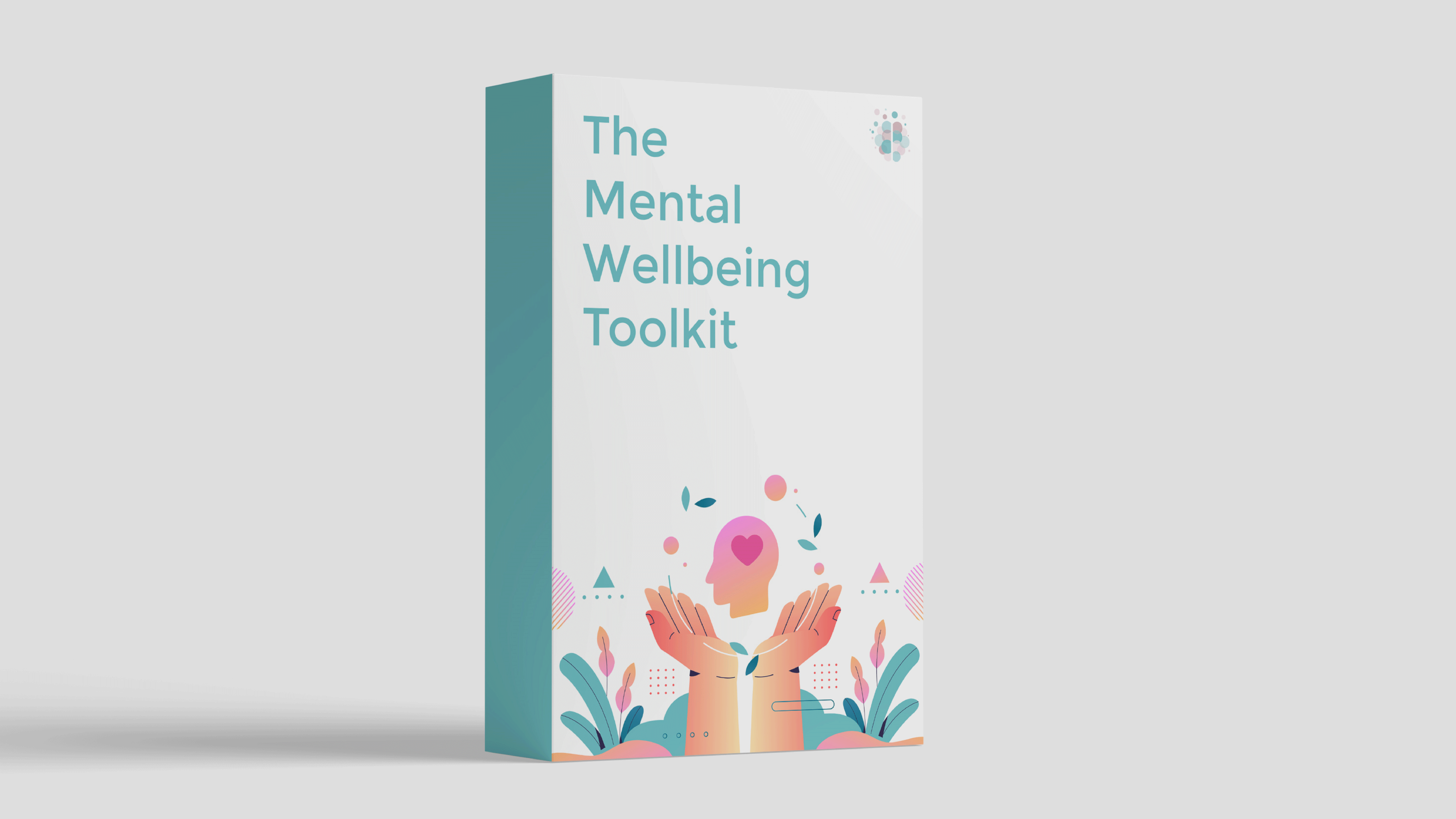
Our self-guided program includes tools from CBT, DBT, ACT and more, so you can discover what works best for you. Check out The Mental Wellbeing Toolkit today – it's "like 10 therapy sessions in one."


Author

About Rebecca
Rebecca Marks is the founder of The Wellness Society, a social enterprise that has supported thousands on their journey to mental wellbeing.
Her tools have been shared by the NHS and featured by Mind, the UK’s leading mental health charity. She comes from a career in mental health charity management, facilitating peer support programs and co-producing initiatives with service users.
Learn more about our story on the About page.