
When we feel anxious, our natural instinct is to stay away.
Whether we’re worried about saying the wrong thing in an email, finding parking when we visit a new place, or coming up with things to say at a party, the impulse is often the same – find a way to avoid it.
And at first, avoidance works. When we put off sending that email, find someone to give us a ride or decline the invitation to the party, we get an instant sense of relief. It all felt so overwhelming, so risky, and now it’s off our plate.
Sometimes that’s okay, but when avoidance becomes our default strategy, we lose confidence in our ability to cope with uncertainty. Plus, our fears start to feel more and more substantiated.
If I don’t go to a party because I’m convinced I’ll be awkward and uncomfortable, the relief I feel can make it seem like avoiding it was the only way to cope. As a result, I’ll probably avoid more social activities. Even if I try to convince myself that it’ll probably be okay and that maybe I’ll have fun, it still feels safer to avoid.
This is where exposure therapy comes in.
Instead of waiting to feel less anxious, we take control by facing our fears head on. But it’s not as simple as “just do the things that make you anxious”. Before jumping into exposure work, it’s important to understand how our brains process fear and anxiety.
Inhibitory Learning: The Theory Behind Exposure Therapy
Anxiety has a natural rise and fall, so when you stay with a feared situation, you’ll see your anxiety naturally go down. As you continue to practice, you then have less anxiety about those situations because you know the anxiety is temporary and not dangerous. This process is known as habituation.
However, while anxiety often drops over the course of exposures, this isn’t always the case.
Also, people can benefit from exposure therapy even when their anxiety stays high during exposure practices.
Recent research explains why. Inhibitory learning suggests that exposure works not only because anxiety decreases, but because you learn that you can tolerate uncertainty and distress without avoidance, reassurance or checking.
When we face our fears in exposure therapy, we gain a new understanding that competes with our old fear associations. When we repeatedly see ourselves cope with anxiety, the anxiety itself stops being threatening and the brain stops processing anxiety as dangerous.
Exposure Therapy in Practice
Exposure therapy starts with creating a clear understanding of your anxiety. You spend time exploring the cycle of fear, identifying specific triggers, thoughts and behaviours that maintain anxiety.
Exposure therapy also involves a lot of preparation, such as reviewing the unhelpful beliefs about exposure or the feared situations so you’re equipped with a strong, confident mindset as you challenge yourself.
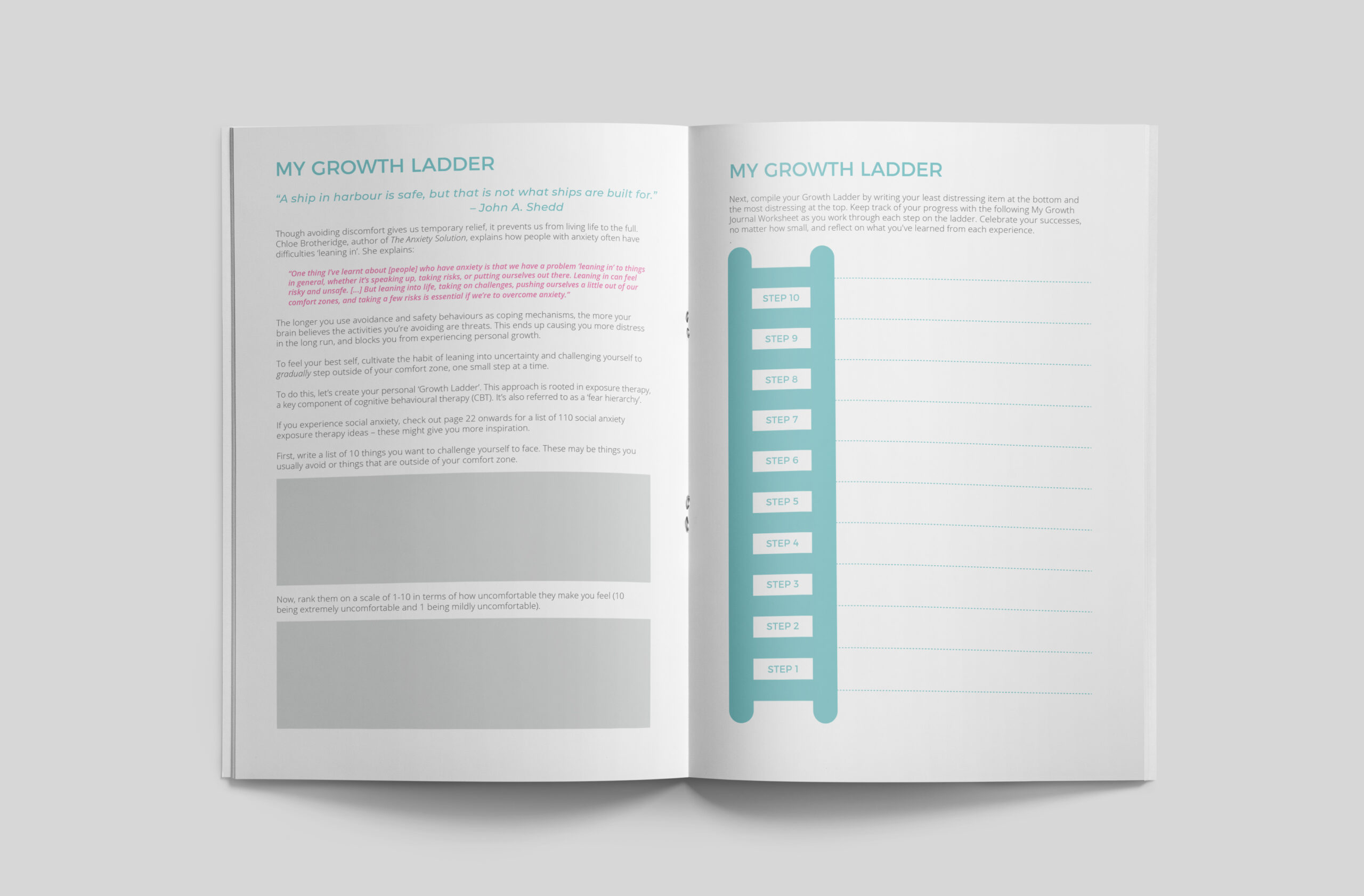
From there, you work with your therapist to create a personalized plan. This is a bridge towards the situations you’ve been avoiding with small, manageable steps.
There are different types of exposure depending on the content of your anxiety:
- In vivo exposure involves facing real-world situations that you’re currently avoiding, like attending social events, sending emails, touching feared objects, or visiting new places.
- Imaginal exposure involves writing or listening to scripts about feared outcomes. This is helpful when your “what if” thoughts and catastrophic interpretations are fueling your anxiety.
- Interoceptive exposures involve exposing yourself to feared physical sensations like rapid heart rate or dizziness. This is helpful if the fear of fear is holding you back.
Illustrative Case Study Example
To see how these concepts play out, consider the case of Jenny, who struggles with incessant doubts about her health.
Jenny is very aware of all the sensations in her body. To Jenny, a headache, a heart rate that seems faster than normal, or a sore throat are all potential signs of something serious. She’s terrified that she’ll miss a symptom that could be an early warning sign of a bigger issue.
To cope with this fear, she looks up her symptoms online, constantly monitors her symptoms for changes, and asks her mom for reassurance that it’s not something serious. She often schedules appointments with her doctor just in case.
These strategies bring some temporary relief and make Jenny feel like she’s being responsible and not neglecting her health. But the doubt always comes back.
In exposure therapy, Jenny works on identifying the pattern that keeps her anxiety going: the more she Googles and monitors her symptoms, the more anxious and unsure she feels about her health.
Next, she creates a plan to gradually reduce the behaviors keeping her stuck:
- Delay Googling symptoms for 10 minutes, eventually limiting googling to once per day.
- Read a short article about a health issue without seeking reassurance afterward.
- Gradually increase delay before asking for reassurance or booking doctor’s visits.
At first, Jenny feels more anxious than before.
The urge to check and get reassurance is stronger than ever. But by staying with the discomfort, she begins to learn that the anxiety goes down on its own – and the symptoms that she notices come and go too.
She sees that she can tolerate some uncertainty about her health. It’s not about being 100% sure that nothing is wrong – it’s about building confidence in her ability to cope.
Misconceptions About Exposure Therapy
Some people may have a negative view of exposure therapy, picturing being forced into feared situations and flooded by anxiety. But in practice, exposure-based therapy is supportive, collaborative and aimed at building confidence and renewing your trust in your ability to cope.
Exposure therapy is not overwhelming someone with their biggest fear at the outset. In real exposure therapy, you should never feel forced beyond your comfort zone. When you do something hard, it’s because you know practicing will get you closer to your goals and release the grip anxiety has on your life.
Exposure therapy also goes at your pace. If a step feels too big, the goal is to make it smaller until it feels manageable again. It’s not about how quickly you reach the top of your hierarchy.
Why Exposure Works Long Term
If avoidance is a short-term fix for anxiety, exposure work is the long game. When we avoid, we reinforce all our previously held beliefs about ourselves, others and the world.
Exposure actually builds new pathways in our brain, creating new associations. Our brains learn through experience, not reasoning. Instead of telling yourself things will be okay, you show it through facing the things you’re afraid of.
With repeated practice, the brain creates new associations. When we feel anxious and do it anyway, we show ourselves that anxiety doesn’t mean we’re not capable. When we stay with difficult situations without escaping, we show ourselves that fear doesn’t mean danger.
What helps us build resilience in the long run is not avoiding anxiety, but showing yourself that you can handle discomfort.
How To Get Started
If you’re curious about exposure therapy, it’s reasonable to give it a try on your own. Start with a simple avoidance pattern. Maybe there’s a route you always avoid on your way home, or a person who you fear talking to at work.
Create a bridge to work your way towards facing the thing you’ve been avoiding.
Here are some tips for getting the most out of your exposure experiment:
- Expect to feel some discomfort and don’t try to eliminate it. Remember, the goal is to show yourself that you can handle the anxiety, not convince yourself not to have it.
- Stay with the new behaviour long enough to gather new information. If you escape too early, you may not gain new understanding.
- Repeat several times to get full effect. The more repetitions, the more we learn. We can see that sometimes things go better than other times, but we always find a way to cope.
- Reflect afterward. What did I learn from this exposure? What happened differently than I expected?
It’s also important to understand how reassurance and coping strategies can inadvertently undermine exposure therapy.
Over-reliance on strategies like deep breathing, reassurance seeking, checking, or overpreparing can interfere with the learning that takes place during exposure.
These behaviors can prevent the brain from fully processing that the feared situation is safe, slowing progress and reinforcing anxiety rather than reducing it.
Get Exposure Therapy Worksheets
For a huge list of 110 Social Anxiety Exposure Ideas, check out The GROW Planner in The Mental Wellbeing Toolkit.
Worksheets include:
- My Growth Ladder. A worksheet to record your exposure therapy plan, mapping steps onto a ‘growth ladder’.
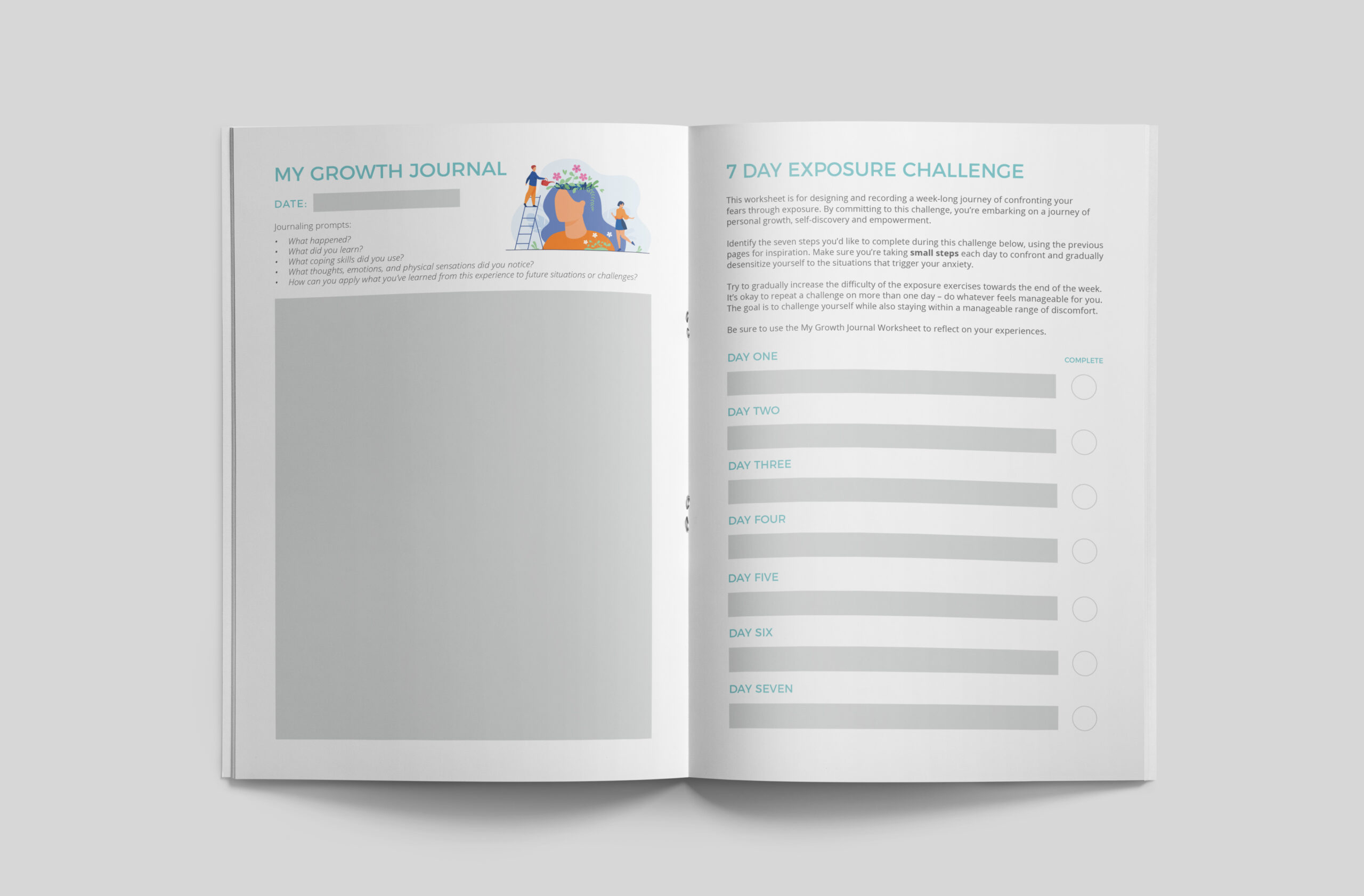
- My Growth Journal. A worksheet to keep track of your experiences and progress, helping you engage in effective self-reflection.
- 7 Day Exposure Challenge. Review the 110 social anxiety exposure ideas and create your own week-long challenge.
- 4 Week Exposure Challenge. A worksheet which gamifies the whole exposure therapy experience – you assign 1, 2, or 3 points for easy/medium/difficult challenges and strive to beat last week’s score!
Summary
Avoidance is our natural response to anxiety, offering short-term relief but reinforcing fear and undermining confidence over time.
Exposure therapy works by reversing this pattern – helping you face feared situations gradually and safely, building tolerance to discomfort, and creating new, adaptive associations in the brain.
For those starting independently, small, manageable exposure experiments can help. Key strategies include staying with discomfort, repeating exposures, and reflecting on lessons learned, while avoiding over-reliance on reassurance or coping strategies that undermine learning.
It takes some time and patience, but each small step is progress and proof that you can handle more than you think.



About Caitlyn
I am a licensed marriage and family therapist with a master’s degree in clinical psychology. I have been working as a therapist since 2009, specializing in Cognitive Behavior Therapy for anxiety disorders and obsessive compulsive disorders. Before starting my own practice in 2021 I worked at a specialty anxiety/OCD group practice, community mental health, and school settings. I provide cogntive behavior therapy (CBT) and exposure and response prevention (ERP) for OCD and anxiety disorders including, panic disorder, phobias, social anxiety and health anxiety. I have been featured in HuffPost, Scary Mommy, The Bump, Apartment Therapy, Living Etc, and other publications. You can contact me via my website, CaitlynOscarsonCBT.com