
Becoming a parent transforms nearly every part of life – including the way you experience and relate to your body.
Many new mothers find themselves navigating a complex mix of emotions: awe at what their bodies have accomplished, exhaustion from the demands of caregiving, and pressure (both internal and external) to “bounce back.”
It’s common to feel conflicted about your post-partum body. The truth is: your body has undergone an extraordinary physical and hormonal journey. Healing, adjusting, and reconnecting with yourself takes time. Keep reading to discover how to manage this process.
Changes to Expect
While some people experience only subtle adjustments, others see more significant differences in shape, texture, and sensation.
For example, if you’ve had a caesarean birth, you might notice a soft fold of skin sitting just above the scar, sometimes called a c section pouch. This happens because the surgical incision cuts through several layers of tissue, and as the area heals, scar tissue forms beneath the skin, sometimes creating a slight overhang. It’s completely normal and, for many, improves gradually with time, gentle core strengthening, and scar massage. In some cases, the fold may remain as part of your body’s new landscape.
Similarly, stretch marks are common after pregnancy. They occur when the skin rapidly stretches to make space for your growing baby. These marks often start out red, purple, or brown, depending on your skin tone, and gradually fade to lighter lines. While they rarely disappear entirely, their appearance softens naturally and can be supported with moisturising creams.
Other changes you may notice include:
- Belly shape and tone. The abdominal muscles may have stretched or separated (diastasis recti), leaving your belly softer or rounder than before. Gentle, post-partum-safe exercises can help rebuild strength over time.
- Skin texture and pigmentation. Some people experience darker patches of skin (melasma) or areas of dryness or sensitivity as hormone levels shift.
- Breast changes. Whether or not you choose to breastfeed, breasts may feel fuller, heavier, or more sensitive, and their shape can change as milk supply adjusts.
- Hair and nails. A temporary increase in shedding is common around three to six months post-partum due to hormonal changes. Your nails may become softer or more brittle.
Remember: these changes are all signs of what your body has accomplished – carrying, birthing, and nourishing life. Recovery is highly individual, and for most people, the body continues adapting over the first year and beyond. Instead of striving to “get back” to your pre-pregnancy body, try focusing on supporting the body you have now with compassion and care.
Be Mindful of Comparison
For many women, body image comparison often intensifies after birth. Scrolling through perfectly curated feeds can create the illusion that everyone else is recovering faster, looking “better,” or coping more easily.
Photo filters, flattering angles, and staged shots present a polished, selective version of post-partum recovery – one that rarely reflects the full reality.
Here are some practical strategies to reduce comparison:
- Curate your feed. Unfollow or mute accounts that trigger negative feelings and instead follow creators who share realistic, body-positive post-partum experiences.
- Practice mindful scrolling. Pause before using social media and ask yourself, “Will this support my wellbeing right now?”
- Remind yourself of context. Continuously remind yourself that behind every picture is a wider reality you cannot see.
- Refocus your attention. Notice what your body can do rather than how it looks. Celebrate milestones like increased strength, energy, or emotional balance.
Anchor Yourself in Gratitude and Awe
Refocusing attention away from appearance-based judgments and toward your body’s capabilities and resilience is one of the most effective, evidence-supported strategies for improving body image.
Here are some ideas for how to implement this:
- Keep a “body gratitude journal” where you write three things your body allowed you to do each day (e.g., “held my baby,” “walked outside,” “took a deep breath”).
- Practice mindful touch: gently place a hand on your belly and thank your body for carrying you through this transition.
- Cognitive reframing is a psychological technique that involves shifting the way you interpret a thought, situation, or belief; it’s about replacing self-critical perspectives with more balanced, compassionate, and empowering ones. See below for some examples.
Thought: “I hate these stretch marks.”
Reframe: “These marks are reminders of the space my body made to bring life into the world.”
Thought: “My scar looks ugly.”
Reframe: “My scar is proof of my strength and resilience during birth.”
Thought: “I feel weak and out of shape.”
Reframe: “My body is slowly healing. Every day it rebuilds strength to support me and my baby.”
Thought: “My breasts don’t look the same.”
Reframe: “My breasts have nurtured and sustained new life, and that’s extraordinary.”
Thought: “I don’t recognise my body anymore.”
Reframe: “My body has evolved with me through pregnancy and birth. It’s still mine, and I’m learning to care for it in this new chapter.”
Thought: “I should have bounced back by now.”
Reframe: “Recovery isn’t a race. My body is taking the time it needs to heal, and that’s okay.”
Mindful Eating
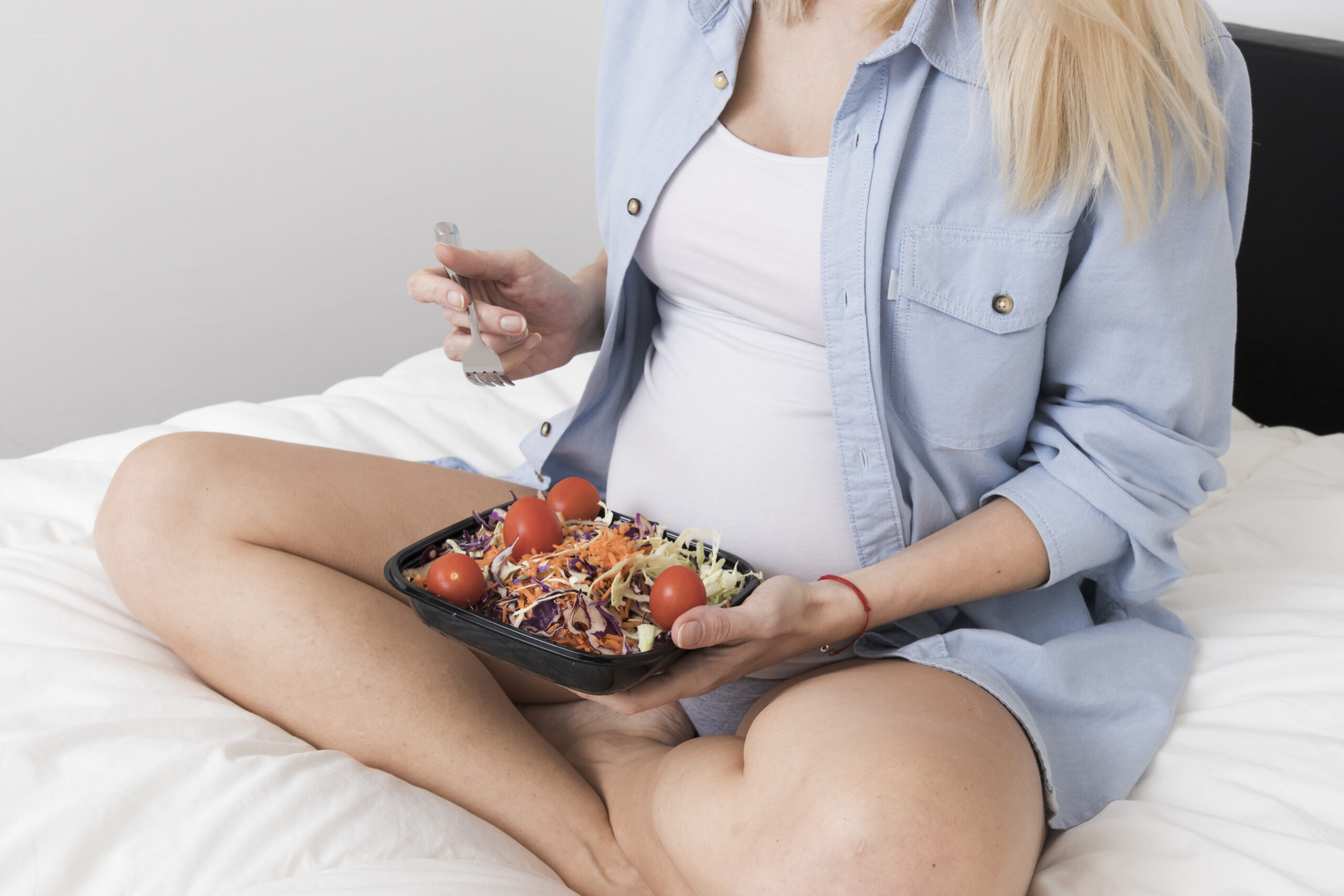
Some women may move toward restrained eating, emotional eating, or even disordered eating as they attempt to control their changing bodies. Pausing to ask, 'Am I hungry or am I tired?' can shift habits away from autopilot. Recognising triggers, like late-night scrolling or comments about weight, helps prevent spirals of body dissatisfaction.
A nurturing approach to food often begins with mindful eating. Rather than counting calories or restricting food categories, it invites you to listen to hunger cues, fullness signals, and the body’s need for comfort or energy.
For new mothers, intuitive eating can soften the pressure of dieting and bring attention back to nourishment. Choosing meals that balance energy for feeding, recovery, and caring for a baby becomes a way of practicing body acceptance. Food becomes less of a battleground and more of a connection to healing.
The Role of Movement

Exercise after birth is about gradual restoration. Some mothers experience restrained eating combined with over-exercising, hoping to return to a pre-pregnancy image. That cycle fuels body dissatisfaction and takes away from recovery.
A softer approach might involve slow walks, gentle breathing, or guided core movements approved by a health professional. Movement in this stage supports circulation, lifts mood, and creates chances for body appreciation, where the focus is on what the body can do instead of how it looks.
Summary
Your post-partum body tells a story of creation, endurance, and transformation. Progress looks different for everyone – and that’s okay.
Healing body image issues is not an overnight process. It involves repeated, gentle acts over months and years. Writing down three things you appreciate about your body each week, limiting social media use that triggers body comparison, cognitive reframing, and focusing on mindful eating and gentle movement can build resilience.
Every moment you choose kindness over criticism helps build a more peaceful relationship with your body.
Remember: you are worthy of gentleness, especially from yourself.



About Rebecca
Rebecca Marks is the founder of The Wellness Society, a social enterprise that has supported thousands on their journey to mental wellbeing.
Her tools have been shared by the NHS and featured by Mind, the UK’s leading mental health charity. She comes from a career in mental health charity management, facilitating peer support programs and co-producing initiatives with service users.
Learn more about our story on the About page.