
Rejection sensitivity can hijack your day in seconds, turning small comments into crushing blows. Therapists know this pattern well, and they’ve built practical tools to help you break it.
Picture walking away from a conversation replaying every word, convinced you sounded foolish. With the right strategies, that spiral doesn’t have to take over. Techniques like reframing thoughts, practicing self-compassion, and grounding in values can shift the moment from self-doubt to steady confidence.
Keep reading to find out more.
1. Psychoeducation on RSD
Understanding the mechanics is the first step toward managing rejection sensitive dysphoria (RSD). Psychoeducation provides clarity about why the brain interprets potential rejection so strongly, reducing the shame that often accompanies the experience.
Therapists often recommend creating a personalised learning plan that involves:
- Reading accessible resources
- Identifying personal triggers
- Recording situations in a reflection journal
2. Cognitive Reappraisal
Cognitive behavioural therapy (CBT) emphasises reframing automatic thoughts. When rejection sensitivity strikes, the mind tends to jump to extreme conclusions such as “They dislike me”.
Cognitive reappraisal involves pausing and challenging those assumptions. Worksheets for this include listing unhelpful thoughts in one column and alternative responses in the next.
3. Behavioural Experiments
Therapists often encourage clients to run small experiments that test their assumptions about rejection. For instance, intentionally sending a short, imperfect email to a coworker and tracking their reaction can reveal that feared rejection rarely occurs.
A simple behavioural experiment log might include the prediction, the action taken, the outcome, and the lesson learned. Consistently reviewing these notes builds resilience and flexibility.
4. DBT TIPP Skill
The TIPP Skill from dialectical behavioural therapy (DBT) focuses on rapid regulation of intense emotions through:
- Temperature
- Intense exercise
- Paced breathing
- Progressive relaxation
Each step offers a clear physical anchor during moments of overwhelm.
5. The STOP Technique
STOP is a grounding tool:
- Stop
- Take a breath
- Observe
- Proceed
This sequence can help interrupt the spiral of rejection-related thoughts. STOP works particularly well in workplace settings where emotional regulation is essential.
Here’s a free worksheet.
6. Opposite Action
Another dialectical behavioural therapy technique is the opposite action technique. When rejection sensitivity urges withdrawal or defensiveness, this skill calls for intentional behaviours that move in the other direction. For example, instead of avoiding a friend after perceiving criticism, you could reach out with kindness.
7. Mindfulness of Emotion
Instead of fighting rejection-related emotions, mindfulness encourages noticing them without judgement. A worksheet may ask you to label the emotion, describe where it is felt in the body, and track how it changes over time.
8. Strengths Journaling
Keeping a journal that highlights daily strengths builds an internal counterbalance to rejection sensitivity. Instead of focusing solely on perceived failures, you list moments where you showed creativity, resilience, or empathy.
9. Social Scripts for Feedback
Rejection sensitivity often magnifies normal workplace or social feedback. Preparing scripts can reduce the fear of responding incorrectly. For example, when receiving constructive criticism, a script might be “Thank you for the feedback, I’ll think about how to apply it.”
10. Sensory Regulation
Engaging the senses provides quick grounding when emotions surge. Techniques might include carrying a soothing texture in your pocket or practicing aromatherapy with lavender oil. A sensory regulation chart could track which sensory tools feel most effective in different settings.
Summary
Therapist-approved tools for rejection sensitivity emphasise both mental and physical techniques. From structured worksheets to mindfulness practices, each method provides a concrete way to lessen the emotional weight of perceived rejection. Different techniques work for different people – experiment and discover what works best for you.
Explore Our Free Tools Library
New to our website? At The Wellness Society, we create practical, integrative mental health and wellbeing tools.
Get instant access to a wide variety of resources designed to support your wellbeing or the wellbeing of others in our Free Tools Library today.
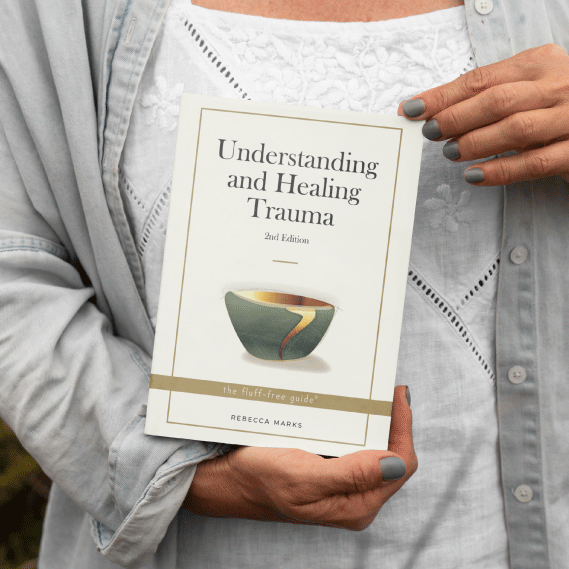





About Rebecca
Rebecca Marks is the founder of The Wellness Society, a social enterprise that has supported thousands on their journey to mental wellbeing.
Her tools have been shared by the NHS and featured by Mind, the UK’s leading mental health charity. She comes from a career in mental health charity management, facilitating peer support programs and co-producing initiatives with service users.
Learn more about our story on the About page.